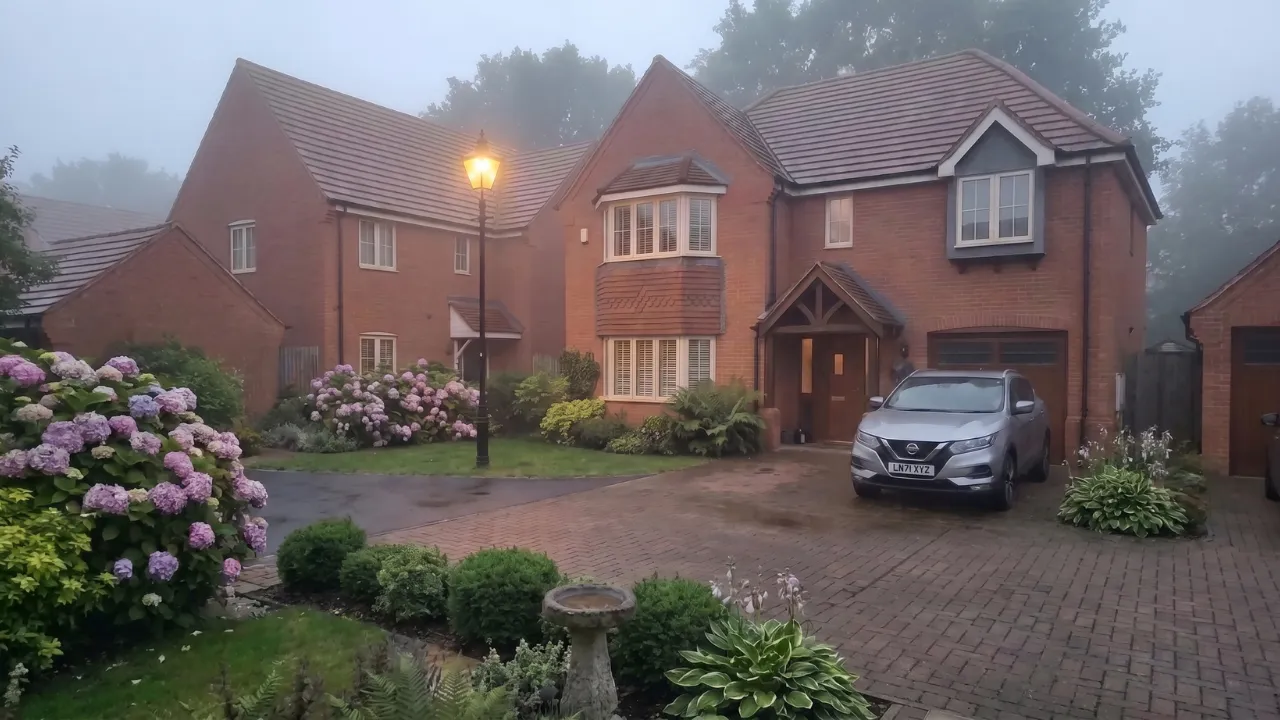
Stretcher-bond red brickwork provides immediate visual weight along residential frontages. Sharp gable profiles, dark roof slates, and crisp lead valleys cut clean geometric silhouettes against an overcast sky. These durable exterior surfaces are built to handle prolonged damp while keeping internal masonry cavities completely dry.
Good residential curb appeal does not come from ornamental clutter. It relies on durable building materials, clean joinery, and planting that anchors masonry to the soil.
When you look down a residential lane at dawn, the structural balance stands out immediately. Deep red facing brick, hand-hung clay tiles, timber porch brackets, and damp block paving work together to give a modern frontage the settled weight of an older English home.
Architectural Warmth in Red Brick and Clay Tile
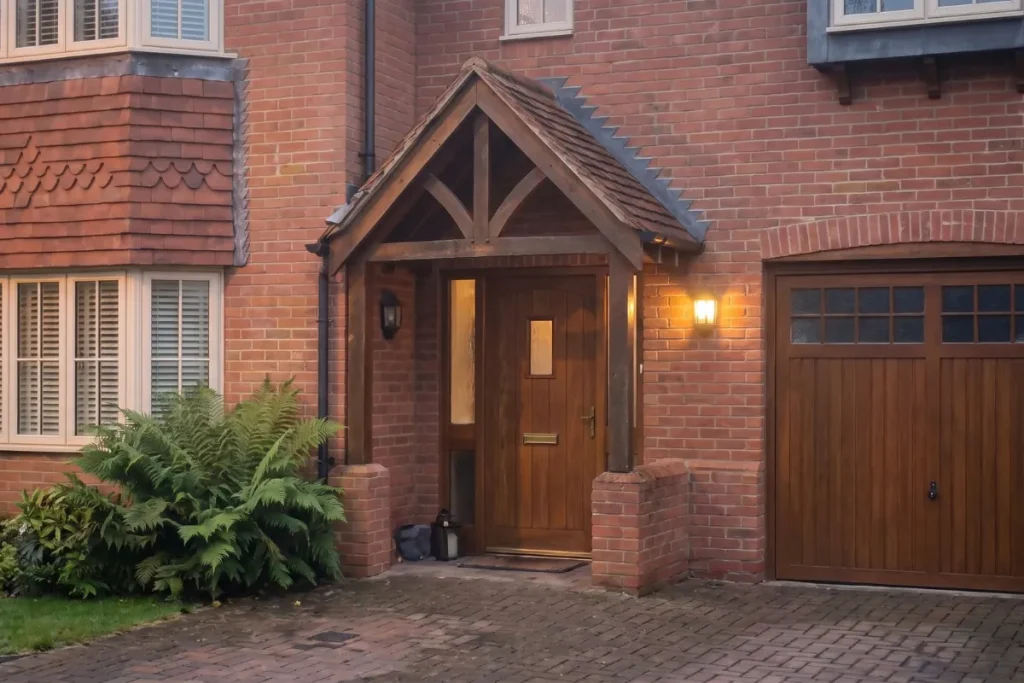
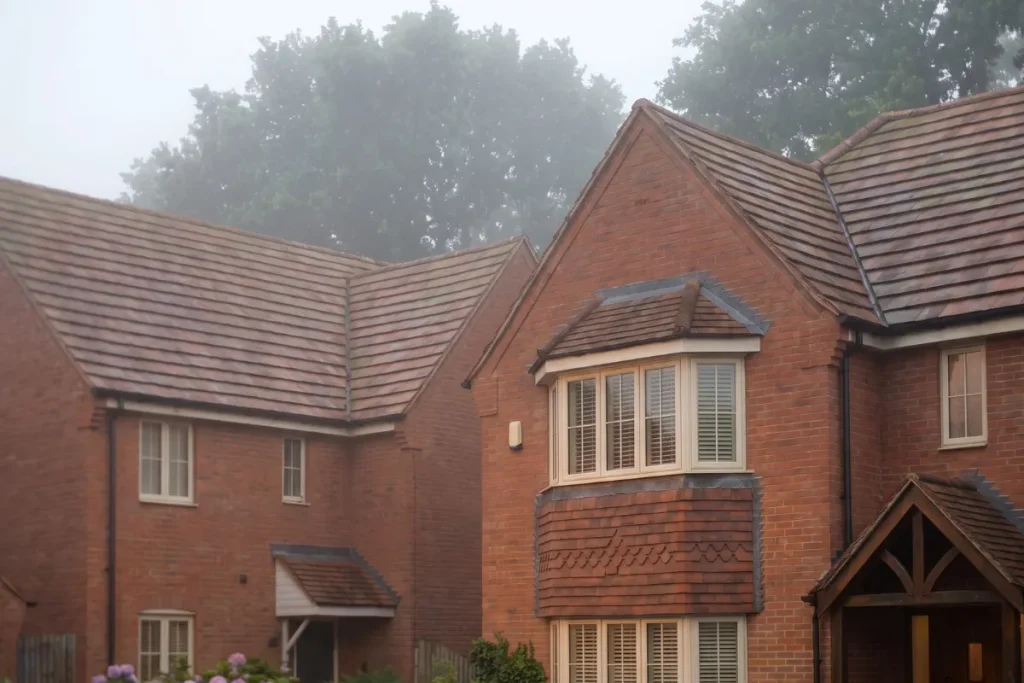
A front elevation needs visual depth to avoid looking like a flat wall of masonry. This facade uses deep red facing bricks laid in consistent courses, establishing a solid, grounded base beneath the damp tree canopy behind the property.
The builders broke up the elevation through stepped rooflines and projecting gable walls:
- Staggered roof pitches: Earthy brown clay tiles cover uneven roof slopes, creating variable ridge heights against the morning sky.
- Vertical tile-hanging: Between the lower and upper bay windows, vertical clay tiles form sharp horizontal shadow lines, breaking the flat brick face between floor levels.
- Gabled timber porch: Heavy diagonal oak struts support a pitched canopy over the front door, keeping driving rain away from the threshold while giving the entrance clear visual weight.
- Timber garage doors: A matching pair of vertical-boarded wooden vehicle doors with glazed top lights ties the garage directly into the front joinery scheme.
Using hanging tiles between window tiers does more than add texture. It nods to regional vernacular building, softening the transition between brick storeys without relying on painted render bands that demand constant upkeep.
Windows That Define Character and Privacy
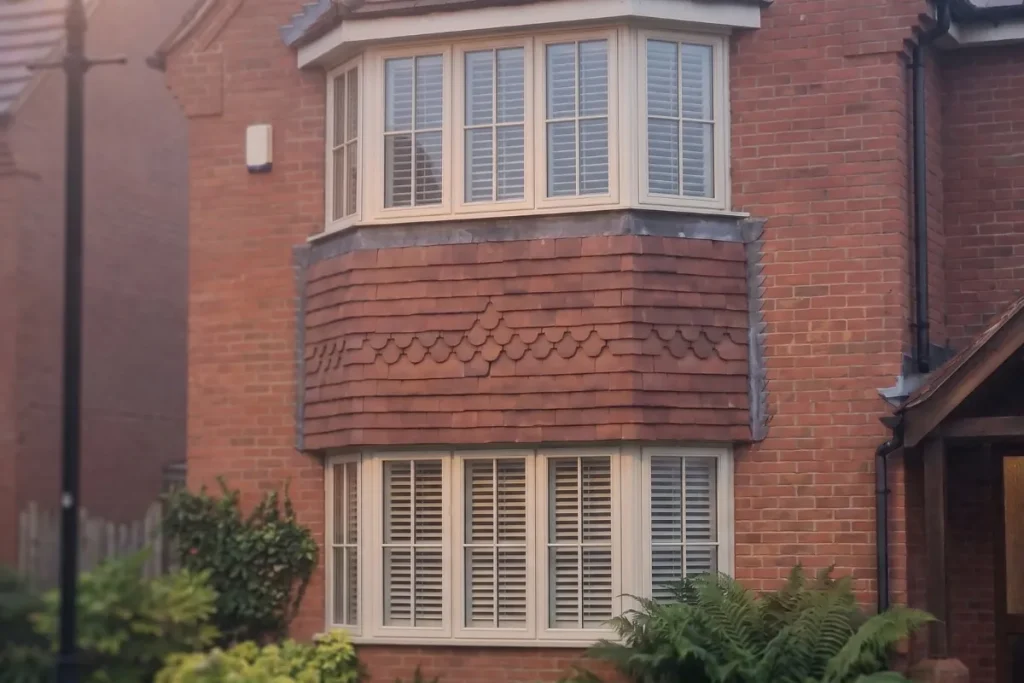
Glazing choices determine how a home reads from the pavement while regulating interior light and privacy. Here, off-white window frames create a crisp border against the deep orange-red facing brick.
The two-storey canted bay window pushes out from the main wall plane, catching early daylight from three distinct angles while breaking up the frontage.
Inside the double-glazed units, white plantation shutters deliver a clean, uniform look from the street. Instead of mismatched curtains or half-drawn blinds, the horizontal louvers keep both floors visually tidy.
Shutters also give the homeowner precise control over privacy on a front-facing plot. You can angle the slats upward to pull morning light across the ceiling while blocking the line of sight from the pavement, keeping the front facade structured whether interior rooms are occupied or empty.
The Softening Power of Mophead Hydrangeas and Foliage
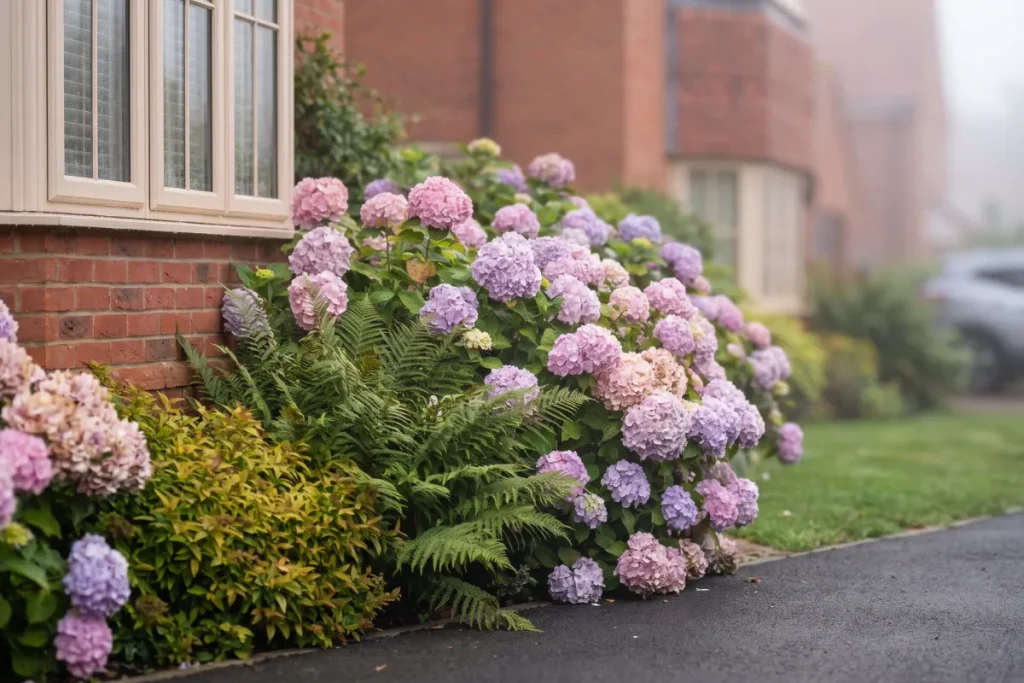
Brick walls and tarmac need dense boundary planting to avoid feeling harsh at ground level. Along the curve where parking meets the front lawn, broad mophead hydrangeas anchor the beds.
Their heavy bloom clusters shift through blush pink, mauve, and pale lilac, flopping naturally over the turf line.
Below the ground-floor bay windows, layered foundation beds hide the raw damp-proof course and soil line:
- Broad ferns: Delicate arching fronds catch the morning moisture, contrasting against the solid brick plinth behind them.
- Golden-green shrubs: Varied leaf colors break up solid green hedge blocks, adding brightness on overcast days.
- Dense ground cover: Low perennial foliage keeps soil damp and suppresses weeds right up to the wall base.
Putting broad-leaf perennials tight against foundation brickwork stops the house from looking like it was dropped onto bare ground. It roots the structure into the site.
Hardscaping Harmony: Block Paving and Lawns
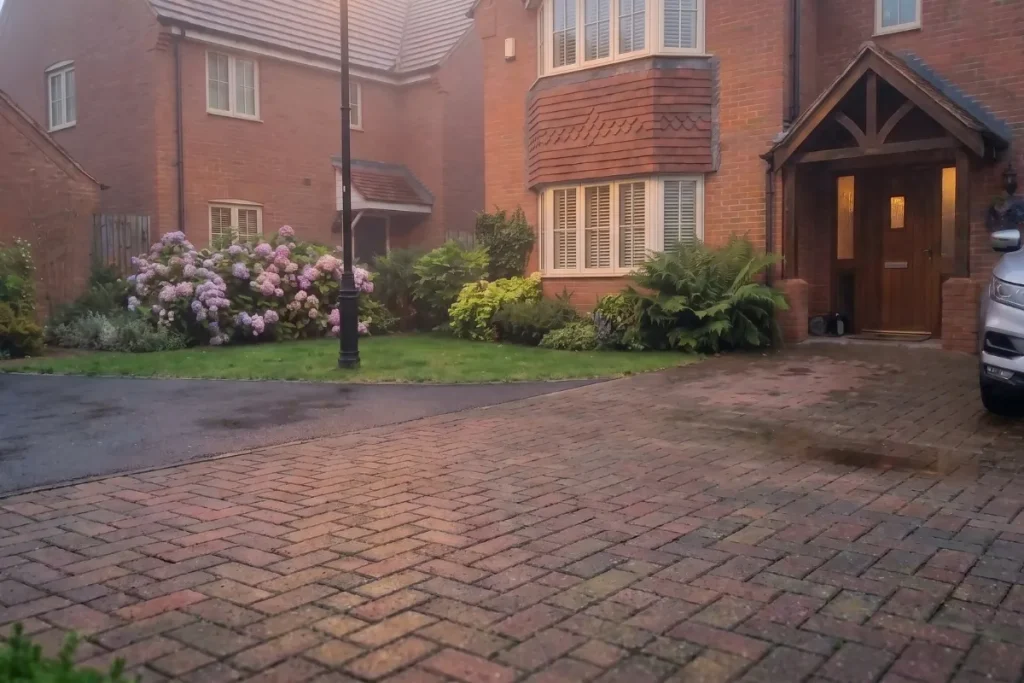
The front driveway needs to handle daily vehicle loads without looking like a featureless expanse of asphalt. Here, the forecourt uses variegated concrete block pavers in warm buff and terracotta tones.
The varied paver colors echo the brick facade, while tight sanding joints give tires solid wet-weather traction.
A curved ribbon of fine turf separates the main vehicle area from the planting border. That narrow turf band acts as a clean stop-line between tyre tracks and soft soil, keeping wet dirt off the pavers.
Keeping a clear grass buffer between tarmac roads and block paving also helps with surface drainage, absorbing excess runoff during heavy British downpours before water reaches the foundation beds.
Sculptural Details and Classical Street Furniture
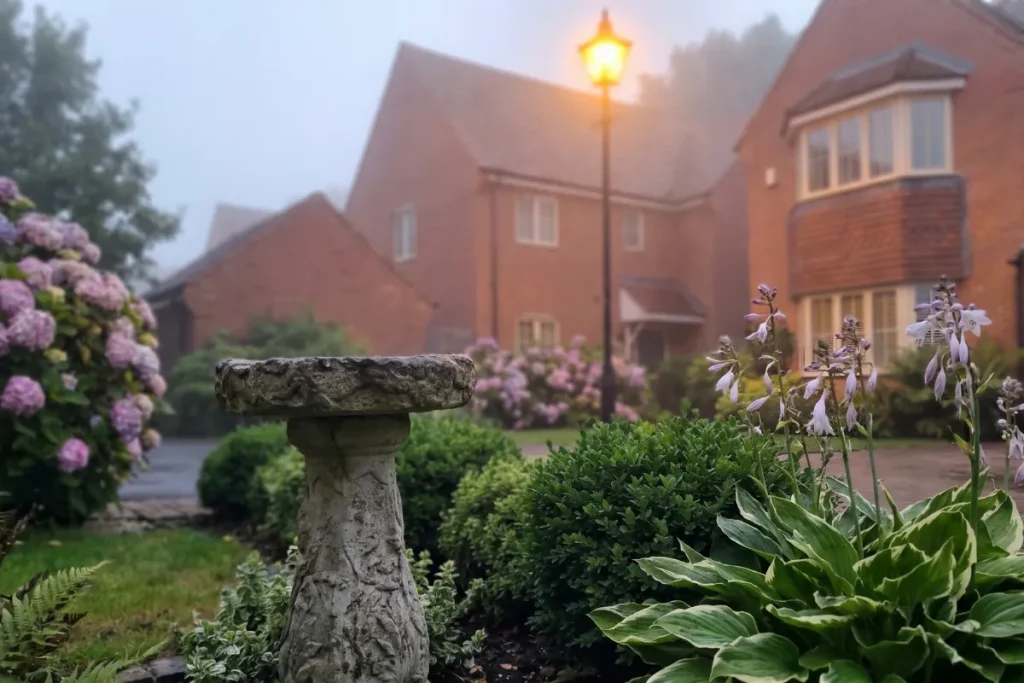
Garden details should look like permanent fixtures rather than seasonal garden center add-ons. Set near the lawn edge, a tall, black cast-iron post lantern casts a circle of warm light across the wet pavers, cutting through the morning mist and acting as a clear vertical marker on the corner.
Down at ground level, smaller elements give the garden a lived-in feel:
- Boxwood globes: Clipped evergreen spheres mark the border corners, providing winter structure when hydrangeas die back.
- Hostas: Wide leaves fill the gaps under the shrubs, pushing pale flower spikes straight up through the mulch.
- Carved stone birdbath: An old stone basin stands half-hidden in the leaves, holding shallow water that catches morning sky light.
Putting low stone and clipped greens near the path anchors the yard without blocking the view to the front door.
Creating a Cohesive Sense of Welcome
Lasting curb appeal is not about adding expensive ornaments. It comes down to proportion, durable materials, and planting that frames the architecture.
When facing brick, hanging clay tiles, crisp window joinery, and well-placed borders work together, a home feels settled into its plot from day one.
As the morning mist lifts and reveals the warm tones of the roof tiles, the entire frontage reads as a cohesive, practical space built to handle changing seasons with minimal fuss.
Visit By Sophie Sweet for more practical guides on British home exteriors, perennial border schemes, and classic masonry details. Discover how atmospheric weather frames period facades in our look at misty English residential architecture, or soften foundational brickwork using our guide to layered front garden ideas for classic curb appeal.
2 thoughts on “Red Brick Curb Appeal: English Architecture in the Morning Mist”