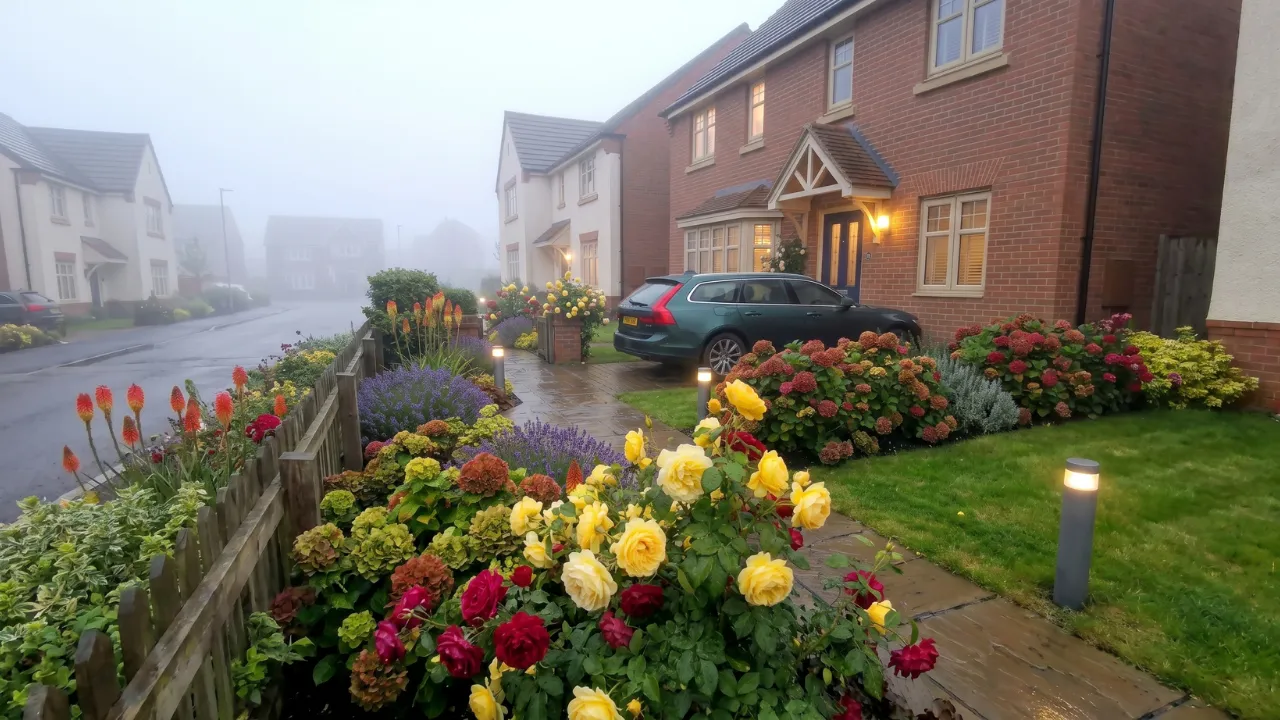
A well-executed front boundary establishes the relationship between private domestic spaces and the public road. When structural borders are planted in deep, sweeping drifts, the garden does all the heavy lifting for curb appeal. The warm cast of low post lanterns, sheltered timber porches, and saturated perennial foliage work together to anchor the architecture.
A front garden is the working threshold between the public pavement and private domestic life.
Instead of relying on bare grass lawns or stiff rows of dwarf conifers, a lasting entrance depends on layered borders, practical stone paths, and planting that handles the damp seasons without turning into a tangled mess.
Layering Architectural Spikes and Classic Blooms
Building an effective front border starts with mixing upright silhouettes with broad, spreading perennials. If you plant only mounding shrubs, the bed looks like a flat cushion from the pavement.
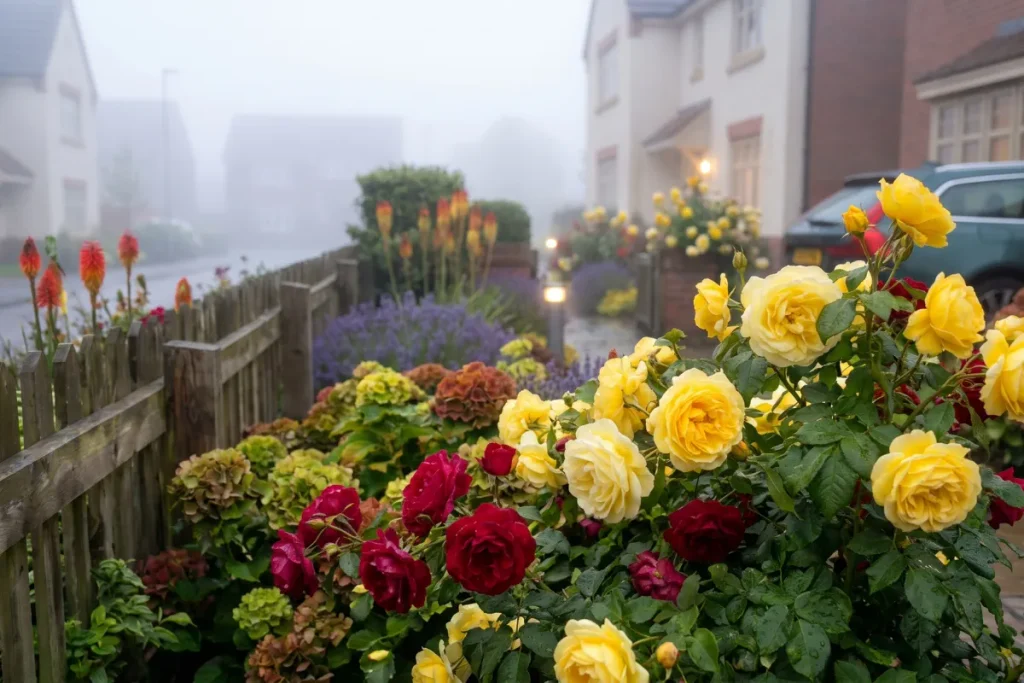
Standing tall along the timber perimeter, the thick flower torches of red hot pokers (Kniphofia) cut straight through early fog. Their upright spikes transition from deep scarlet tips down to warm ochre bases, giving the rear of the border a strong vertical spine.
Right below these spikes, shrub roses anchor the front edge with heavy, cupped flowers:
- Yellow shrub roses: Butter-yellow petals open wide above dark green leaves, bringing light into shaded pockets near the fence.
- Velvet crimson roses: Deep red blooms sit lower to the ground, giving the base of the bed rich, saturated colour.
Combining stiff floral spikes with loose, heavy rose canes prevents the border from looking uniform. The spires push the eye upward toward the roofline, while the lower roses soften the ground plane along the path.
Textural Depth Through Soft Perennials and Broad Hydrangeas
Height is only half the equation in a street-facing bed; leaf texture keeps the planting interesting when flower heads fade.
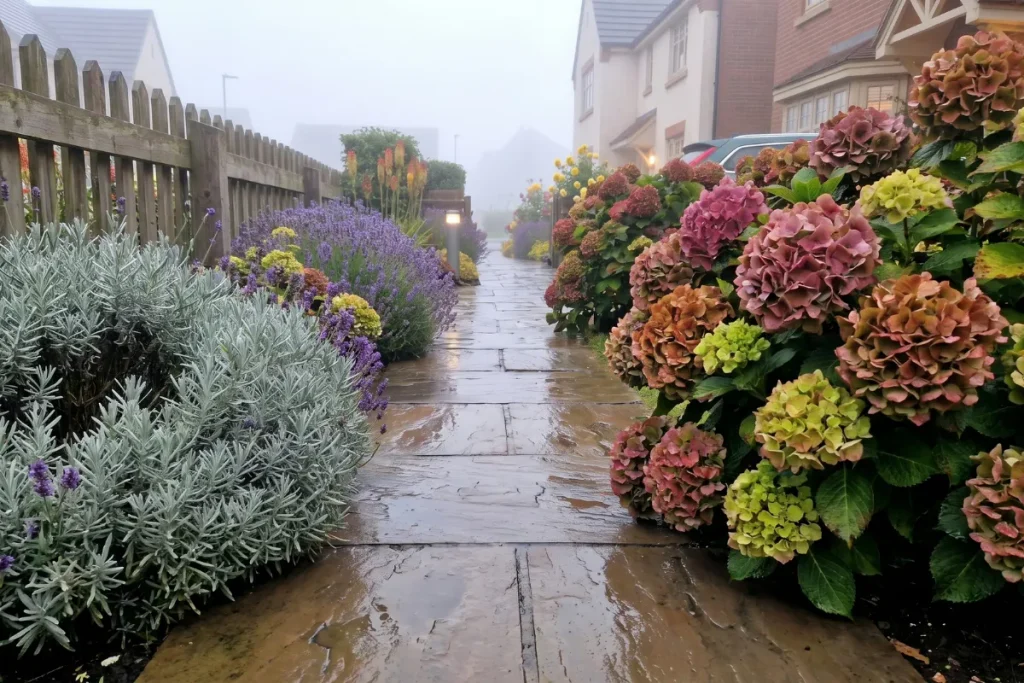
English lavender forms dense, rounded cushions of narrow grey-green leaves along the walking edge. Their thin purple flower spikes brush against the stone flags, introducing a fine, bristled texture that offsets wide paving slabs and broad-leaf shrubs.
Across the pathway, the planting shifts to broad mophead hydrangeas:
- Substantial foliage mass: Wide, coarse leaves hide the base of the house and cover bare soil, stopping weed growth along the drive.
- Shifting antique tones: The rounded flower clusters age across the season, blending dusty burgundy, faded copper, and lime green on the same branch.
- Winter structure: Even after autumn frosts turn the petals papery brown, the dried mophead globes hold their round shape well into January.
Grouped in wide sweeps against the turf edge, these hydrangeas anchor the foundation wall, keeping the house from looking bare against the driveway.
Harmonising Hardscaping and Natural Boundaries
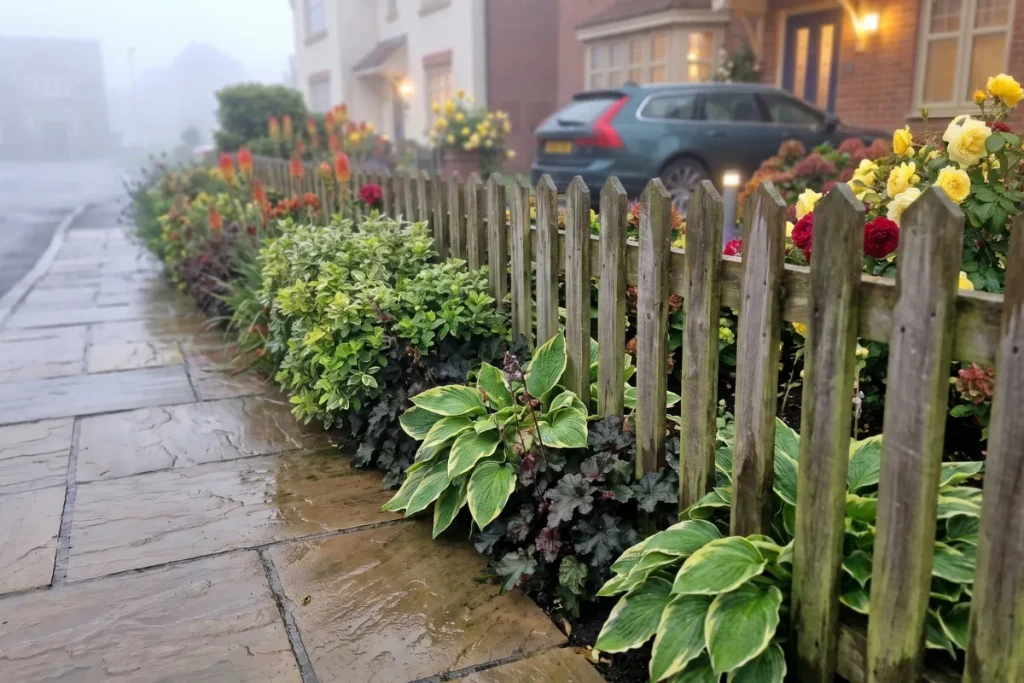
A front garden needs a clear structural skeleton to hold heavy perennial growth. Along the public footpath, a low timber picket fence marks the boundary line without walling off the neighbourhood.
The open spacing between the vertical pickets lets perennial foliage, trailing stems, and rose leaves spill through naturally, breaking up the hard timber edge along the tarmac.
The main walkway to the front door uses wide, cleft flagstone slabs. These broad pavers provide a wide walking track that handles wet boots without tracking mud into the house.
Where the path meets the parking apron, a short red brick pillar matches the boundary joinery directly to the main house walls, tying the fence line and porch together into one solid build.
Architectural Warmth and Welcoming Entryways
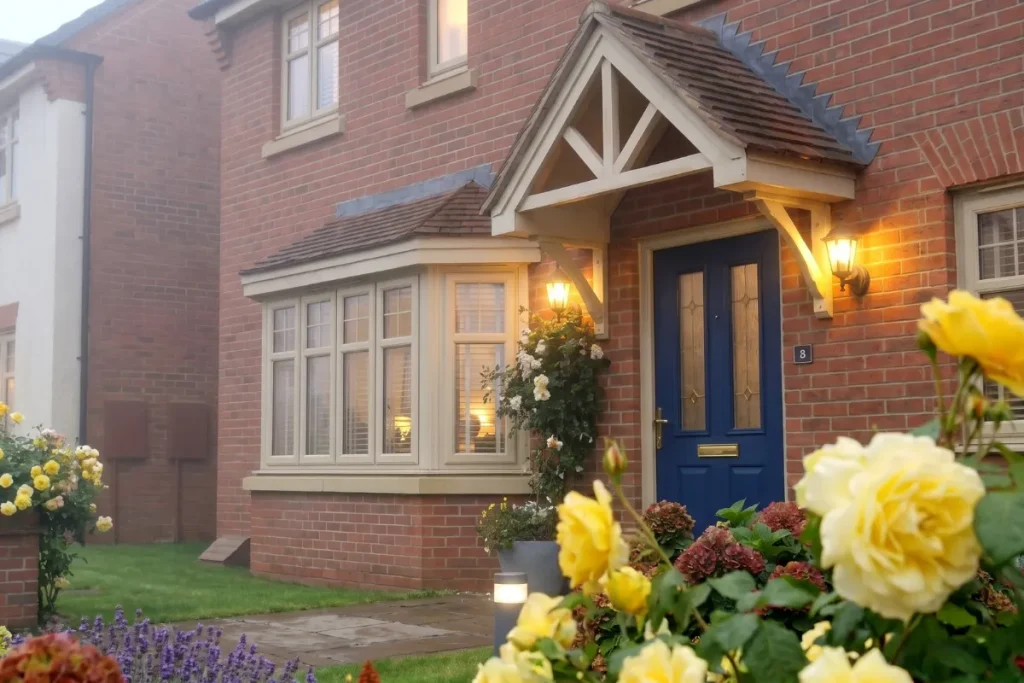
The front elevation of the house uses deep red facing brick balanced by off-white window frames. That brickwork serves as a dark, earthy backdrop that makes bright yellow roses and pale hydrangea petals stand out from across the street.
The front entrance uses a pitched timber porch canopy over a dark navy door:
- Open timber framing: Heavy wooden brackets support the gabled canopy, keeping driving rain off the front step.
- Carriage lanterns: Wall-mounted fixtures beside the frame throw warm light across the door lock and porch paving.
- Ground-floor bays: Canted bay windows pull natural light into front living rooms while reflecting the flower borders outside.
These carpentry and masonry details frame the front door, giving visitors a clear target as they walk up from the gate.
Strategic Low-Level Lighting for Moody Evenings
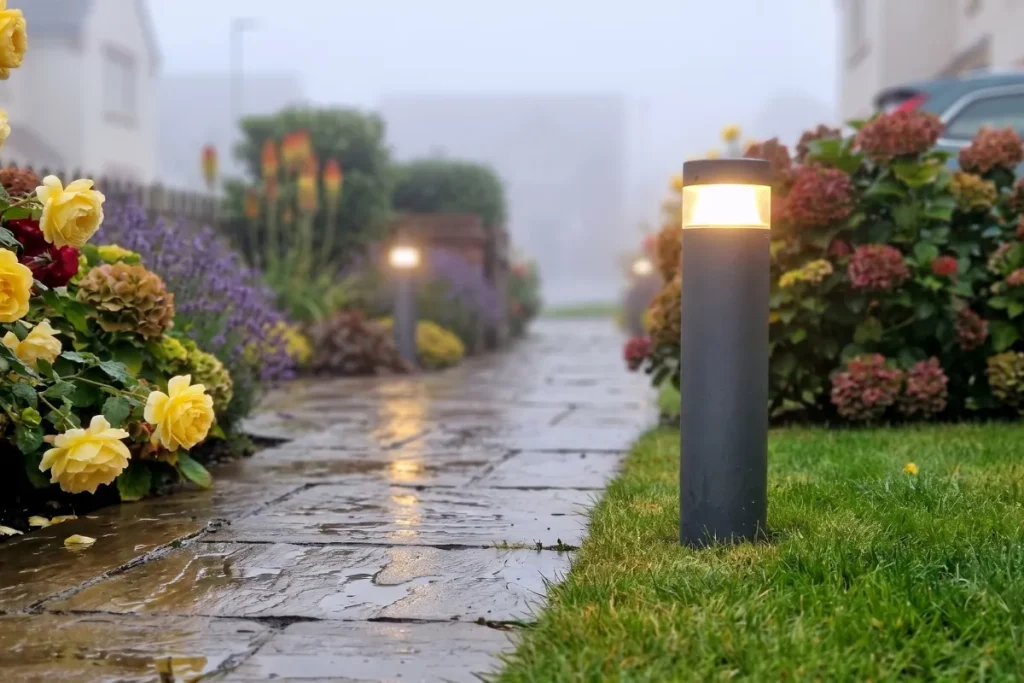
Outdoor lighting should show you where to put your feet without blinding you as you walk up the path. Low bollard lights handle this job far better than glaring wall spotlights.
Charcoal-coloured cylindrical bollards sit right on the line between the lawn and flagstone paving.
When fog rolls in or twilight falls, these low fixtures cast a focused arc of light across the damp stone flags and the lower petals of nearby roses.
Keeping the light low highlights the natural clefts in the paving and reveals wet leaf textures while guiding steps safely toward the porch canopy without throwing light into the neighbours’ windows.
Balancing Crisp Turf with Botanical Abundance
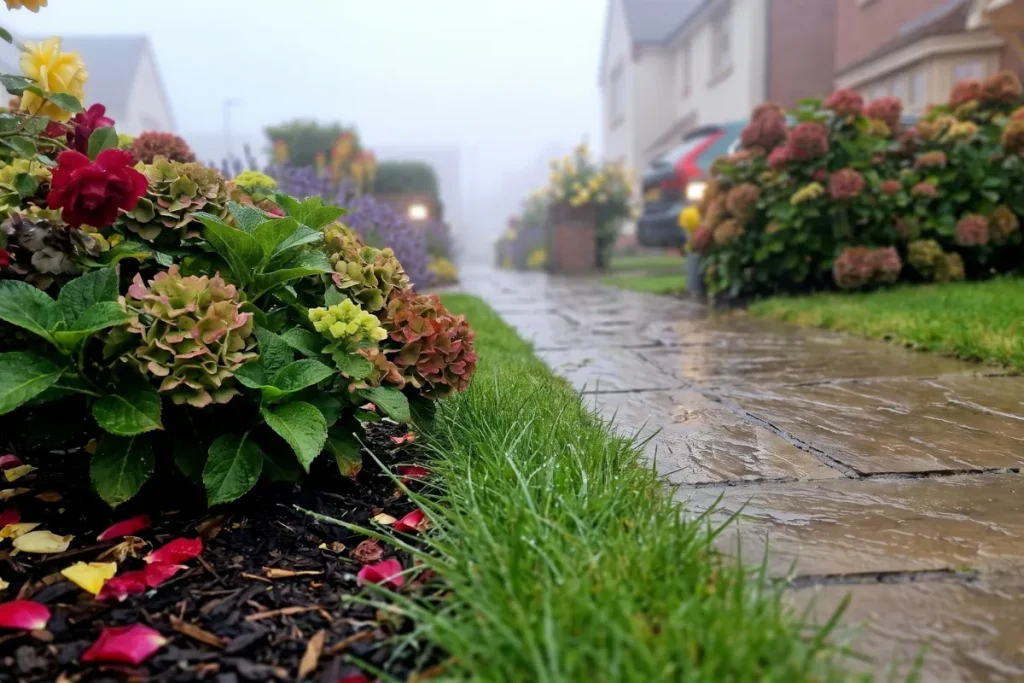
When you pack a front border with large perennials, you need open negative space so the yard does not feel completely overrun.
A narrow ribbon of clean-cut green turf runs between the driveway and the hydrangea beds. That curved strip of lawn gives the eye a flat, restful plane between the hard pavers and dense planting.
Cutting a sharp spade edge along that turf band does two things:
- Separates root zones: It stops vigorous perennial roots from creeping into the grass and keeps lawn mowers away from soft stems.
- Highlights plant forms: The flat emerald grass acts as a clean green frame, making the rough textures of hydrangeas, roses, and lavender stand out individually.
By balancing heavy flower borders with clean lawn edges, natural timber pickets, and sturdy flagstone paving, a front garden feels settled, practical, and welcoming throughout the year. Bring dramatic color drifts into your borders with our feature on lavish blue and pink hydrangeas, or frame your main pathway with structured evergreen accents in our guide to styling garden entrances with topiary spheres and lanterns.