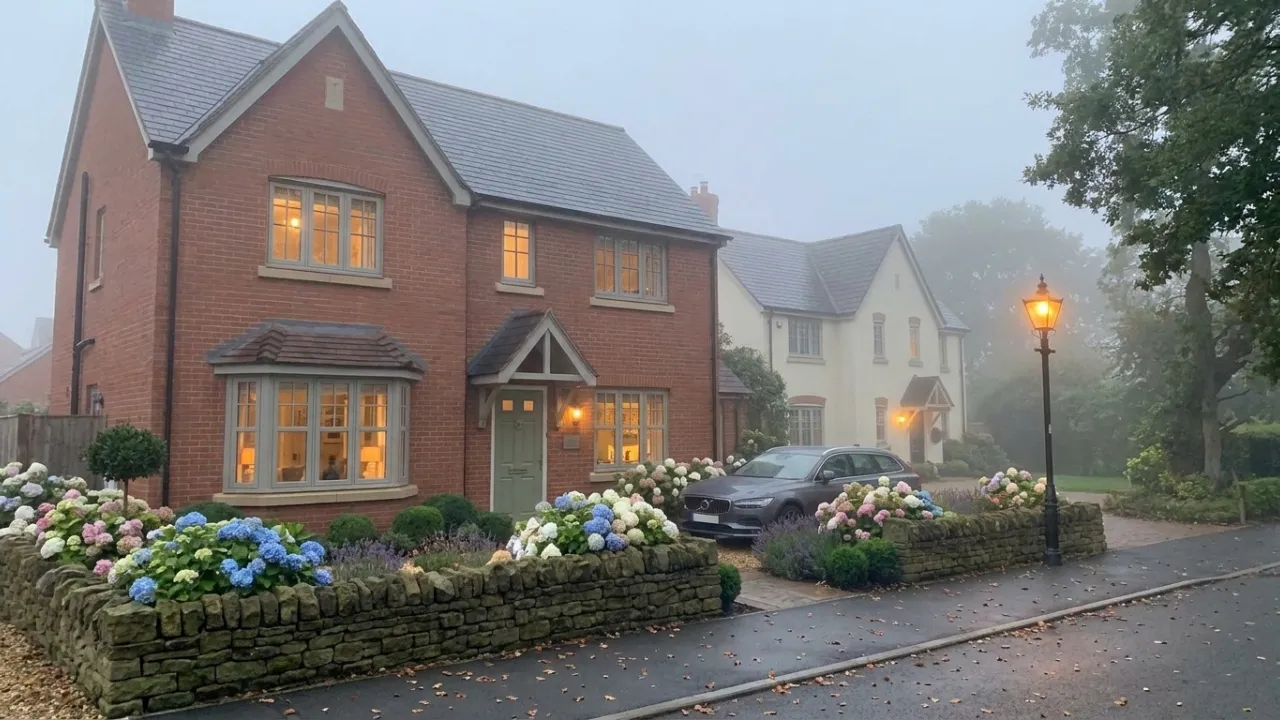
Cast-iron post lanterns anchor boundary lines fast. Drop one right by a gravel turnout and the whole front perimeter changes. It sets a vertical reference point. Without it, you just have flat asphalt running into low fieldstone. The black metal stands out against wet stone copings and the pale wash of summer hydrangeas. It works. You avoid ugly plastic bollards or blinding wall packs. This four-sided glazed head runs a warm filament bulb. It throws light down onto damp road tarmac, the car hood, and the front stone beds without dazzling anyone driving past.
Good exterior styling comes down to fixtures that double as spatial anchors. The tapered iron post claims that boundary corner. It acts like old street ironwork, but handles real-world nighttime visibility. It holds its own against long horizontal courses of stone. Pair dark, heavy metal with rough masonry and muted painted wood, and the entrance looks deliberate. Not accidental. Not overthought.
Sculptural Greenery and Formed Topiary Spheres
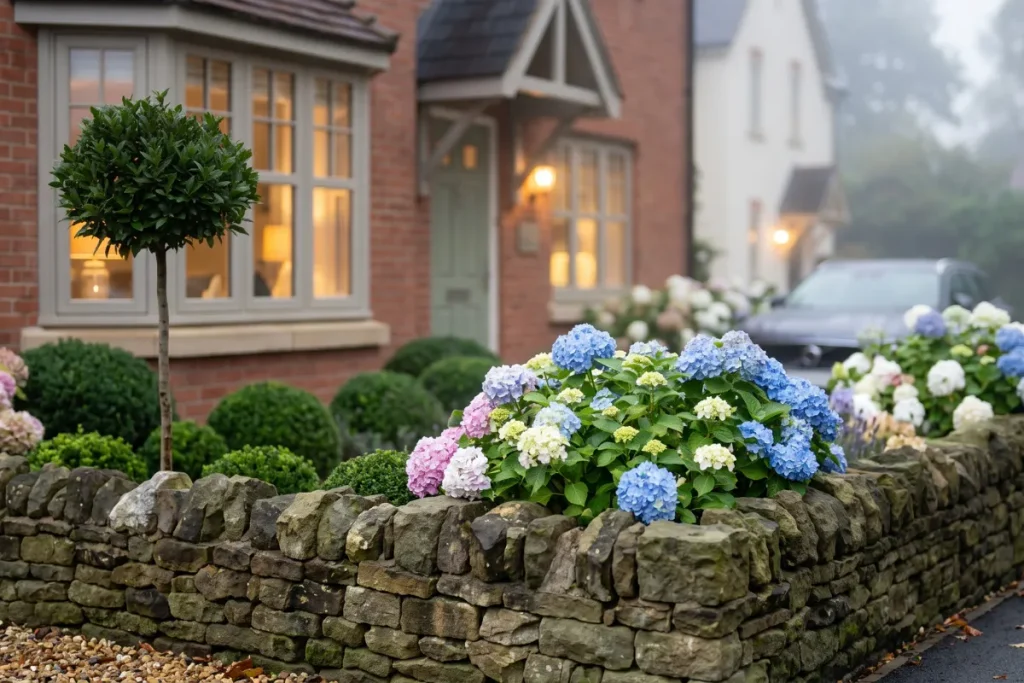
Shrubs are building blocks, not just filler for dirt beds. When clipped into tight geometric shapes, evergreens turn into outdoor sculpture. Between the sprawling mophead hydrangeas, clipped balls of Buxus sempervirens introduce hard edges. Spheres bring instant order. They sit low along the inner wall face, breaking up the loose, flopping flower clusters with pure volume. The tight, glossy leaves look completely different from the broad, paper-thin petals around them.
Look over at the left corner. A standard lollipop shrub lifts a dense green head high on a bare stem. That single plant changes the whole vertical read. It pulls your eye up from the pea gravel toward the ground-floor bay window sill. Keep them trimmed. Shearing these balls twice during the growing season preserves that crisp outline. Once winter comes and the hydrangeas collapse into brown sticks, the boxwood or pittosporum spheres stay solid. They carry the front garden through cold weather when everything else dies back.
Muted Exterior Joinery and Sage Paint Finishes
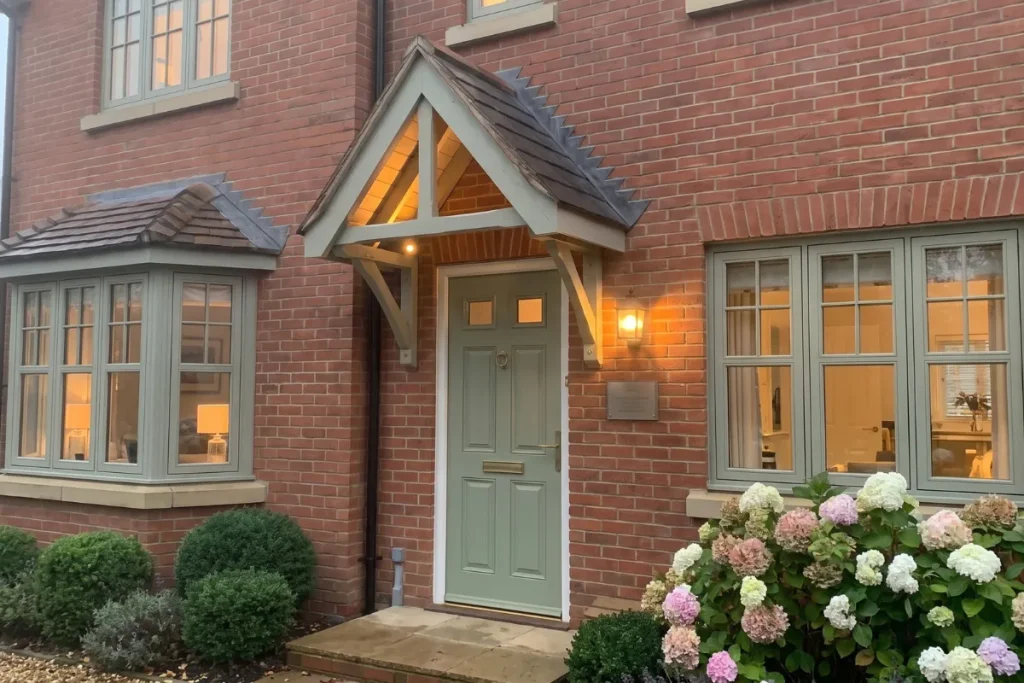
Paint finish dictates whether red brick looks sharp or dated. Standard brilliant white gloss can look cheap against dark clay. Here, the exterior joinery uses an earthy sage tone with a flat satin sheen. It sits quietly. The muted pigment ties the fired brick straight into the garden greenery. Georgian glazing bars split each upper window casement into smaller panes, breaking up wide glass reflections and giving the facade domestic weight.
The main front door takes that same sage coat. It sits beneath a simple open-gabled timber canopy. Look at the upper door leaf. A small square peephole window is cut right into the timber, bringing light inside while keeping the hallway screened from the street. No unnecessary mouldings. The timber brackets under the canopy remain exposed, showing clean timber chamfers and mortise joints. Under the gable roof, a tiny downlight sends a pool of warm light down onto the doorstep stone. It lights the threshold without washing out the entire drive.
Tactile Driveway Transitions with Loose Pea Gravel
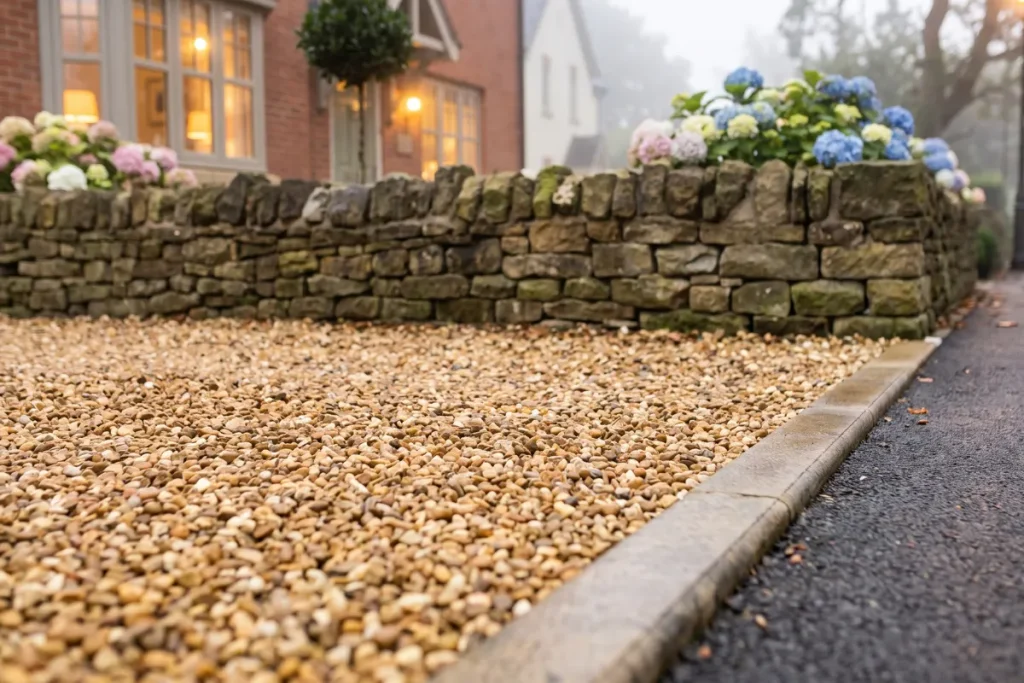
Surfacing materials make or break the sound and feel of an entrance. Poured concrete feels cold. Monotonous concrete pavers look commercial. This entrance uses loose pea gravel across the parking court and walkway. The stones are small, washed, and rounded, running in shades of flint, honey, and river buff. You hear it immediately. The distinctive crunch under tires and boots tells you that you are off the road and on private property. It adds a country courtyard note that asphalt never gives.
Gravel also solves awkward edge transitions. Raked tight against the base of the retaining wall, the loose aggregate buries concrete haunching and creates a neat, porous border line. Rain drains straight through. A low granite curb borders the tarmac highway, locking the stones in place so tires do not drag aggregate onto the public road. The warm stone colors bounce soft daylight back up against the red brick walls, warming the front elevation on grey days.
Architectural Ironwork and Street-Side Boundary Layers
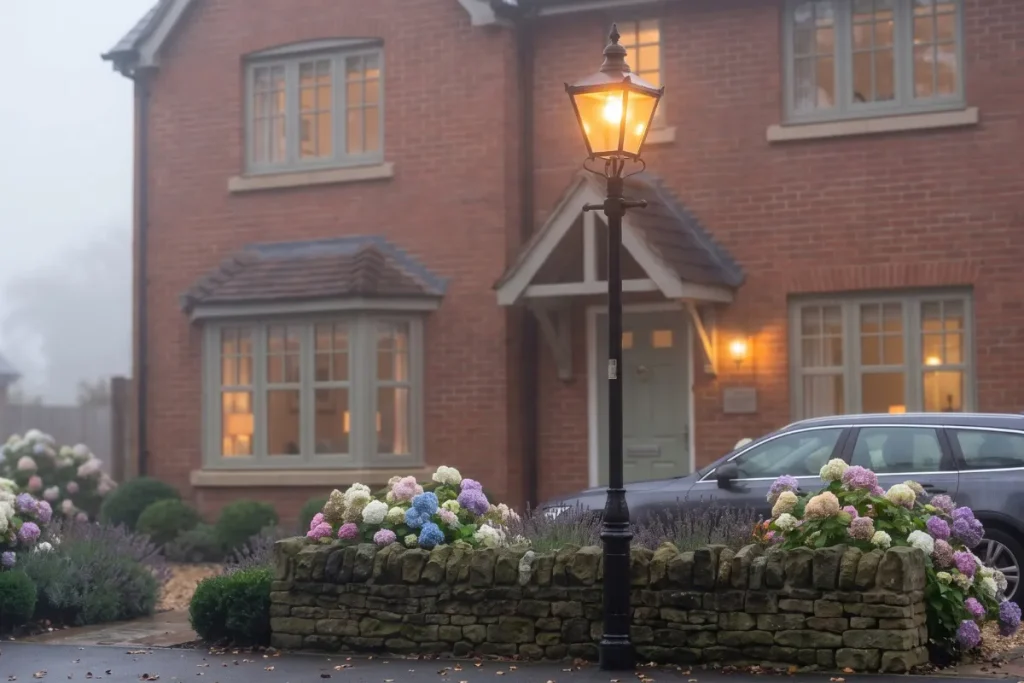
Boundary lines define how a house greets the street. The stone wall handles soil retention, but the placement of hardware finishes the scene. Notice where the lamppost sits. It stays clear of the vehicle track, positioned tight to the stone pier to create a layered corner of black iron, rough stone, and lavender foliage. Scale matters. The glass lantern head tops out below the first-floor bedroom sills, keeping the fixture grounded rather than sticking up into the roofline.
The metalwork avoids busy Victorian scrollwork and fussy leaf castings. Straight lines work better. A basic tapered shaft, clean rectangular glass panes, and simple wall brackets match the plain stretcher-bond brick courses behind. Every metal detail stays uniform in matte black or dark graphite paint, including the hidden fixings. Keeping shiny brass, chrome, or bare plastics away from the boundary ensures the property patinas evenly under wind, rain, and winter frost.
Cohesive Palette from Masonry to Floral Accents
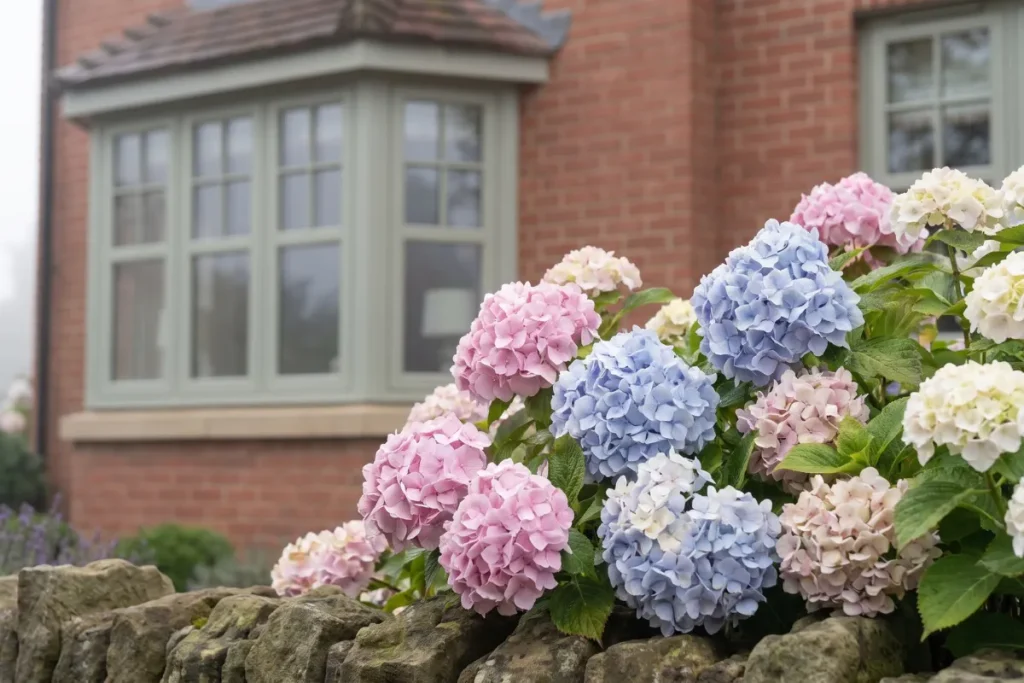
Curating an exterior requires strict discipline with your color wheel. The blooms on the bigleaf hydrangeas (Hydrangea macrophylla) pick up natural variations in the clay bricks and roof slates. The pale rose petals link to the warm clay roof tiles capping the bay window. The pale blue heads pull out the blue-grey slate roof planes and the painted window frames. Everything speaks the same language.
When you keep permanent building materials neutral and understated, the flowers do the talking without visual noise. Next door, an off-white rendered cottage shares the same roofline and pitch, keeping the street view calm. Exterior styling is about holding back. Balance natural stone, painted timber, dark iron fixtures, and structured topiary balls, and you get an entrance that looks right today and will still look right decades from now.
Browse our design archives on BySophieSweet.com for more exterior styling guides, traditional hardscaping ideas, and inspiring residential architecture. Discover how to frame your entryway with our guide to styling garden entrances with topiary spheres and exterior lanterns, or refine your hardware choices in our feature on English garden styling ideas for charming curbside appeal.