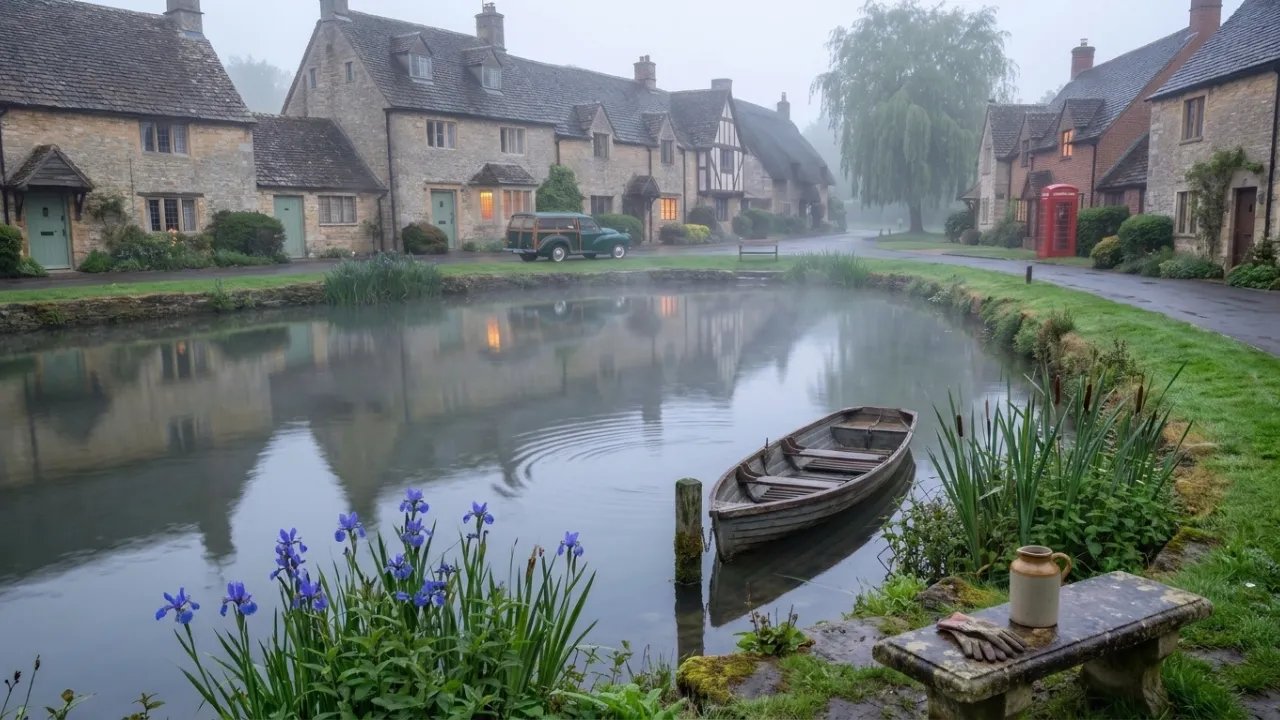
Waterfront construction in an English village solves a straightforward structural problem: preventing saturated soil from washing away. Where soft turf meets a village pond, constant moisture erodes the bank line. Without dense stone revetments and dry-laid retainment, foot traffic turns the water’s edge into churned mud within a single wet season.
Building durable boundaries around standing water is about practical stone craft. Look at a village pond at dawn when mist hangs across the surface. What catches your eye is not complicated engineering, but how local stone, heavy timber, and grass margins work as one solid unit.
When you build near water, durability comes first. Soft riverbanks need weight, footing, and drainage. By using regional limestone and weathered oak, village stonework establishes a permanent edge that handles changing water levels, winter freezes, and everyday foot traffic without shifting out of true.
Low Stone Retaining Walls and Waterfront Margins
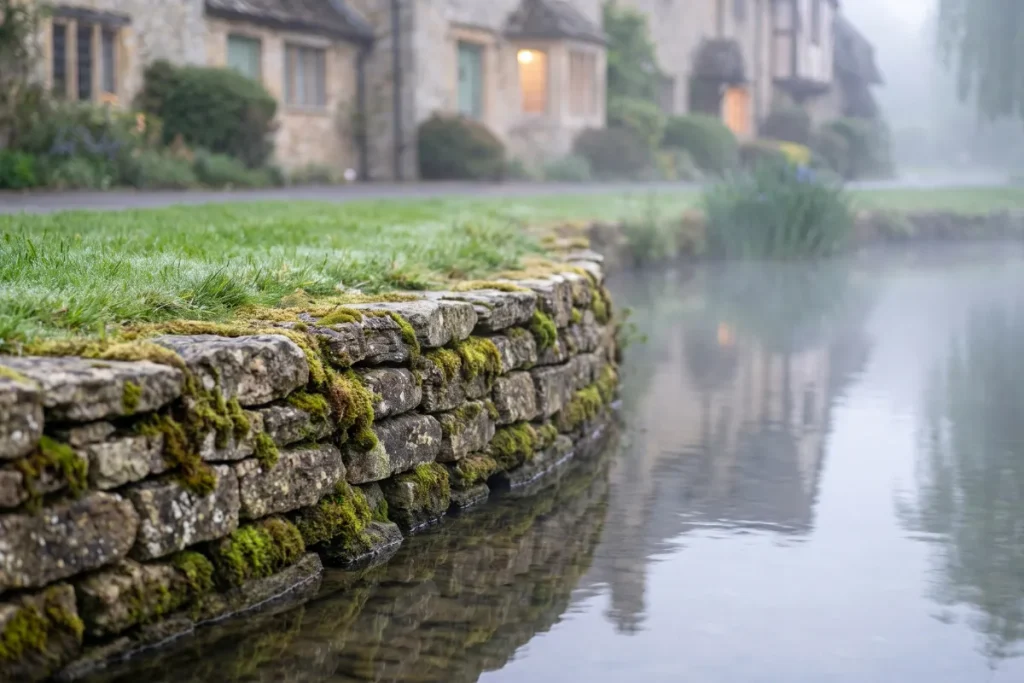
Waterfront retaining walls do a heavy job along a pond edge. The water perimeter here uses low-profile limestone blocks laid along the natural curve of the bank. Instead of running a straight engineered trench, the masons followed the contours of the shoreline, using irregular stone courses to stabilize the turf above.
These low walls hold the dewy grass bed firmly above the waterline. In damp British climates, saturated soil puts constant lateral pressure on any border. A dry-laid or soft-mortared stone wall handles that weight by allowing groundwater to weep through joints rather than building hydrostatic pressure behind a solid face.
Over the years, velvet moss and small ferns find purchase inside the stone crevices. This natural growth binds the masonry into the bank.
Keeping the retaining wall low also keeps the sightline open. You look straight across the water to the cottage facades on the opposite bank without a high parapet cutting off the view. The uneven heights of the individual blocks break up hard horizontal lines, giving the pond a natural, historic feel.
Weathered Timber Mooring Posts and Natural Waterfront Elements
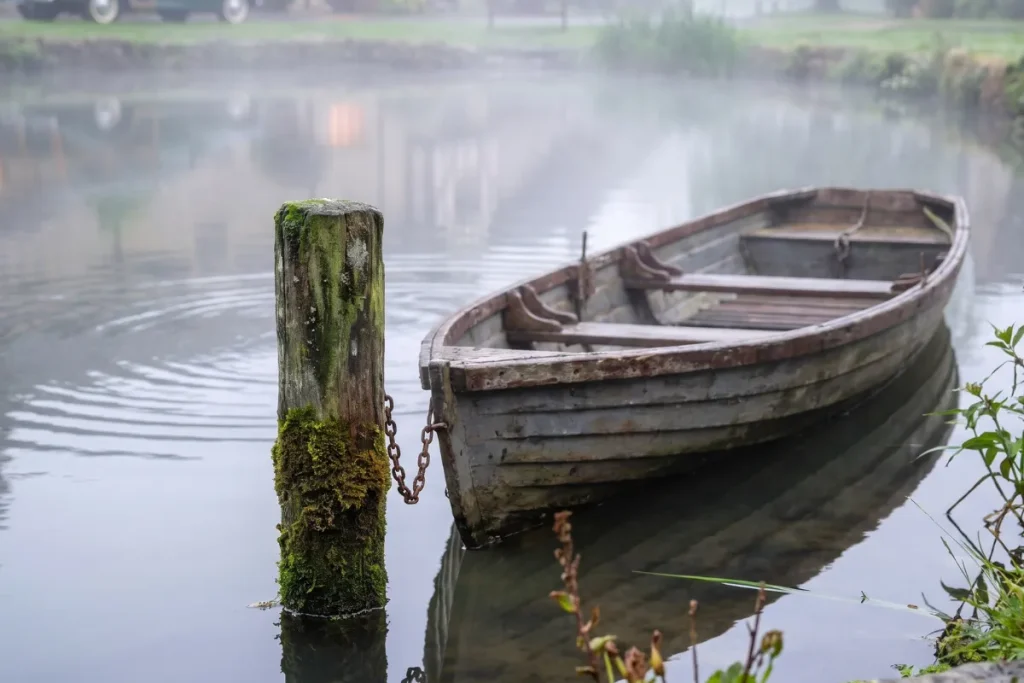
Any timber set directly into standing water faces rot, algae, and constant movement. That is why traditional waterfronts rely on dense hardwoods like seasoned English oak or sweet chestnut.
Driven deep into the pond bed, a heavy, rounded timber mooring post stands near the bank. Its grain has weathered to a soft silvery grey, capped with a green crust of moss where damp air clings to the wood. An iron chain loops around the post, holding a dark wooden flat-bottomed punt at the water’s edge.
Small circular ripples spread out from the hull and post, disturbing the mirror surface of the water.
Timber brings a completely different texture to the pond compared to cold stone. A vertical wooden post breaks the flat surface of the water, giving the eye a solid reference point. It is practical gear built for village life, but it also gives the shoreline an authentic, working character that plastic floats or modern dock hardware completely ruin.
Integrated Stone Seating and Functional Resting Points
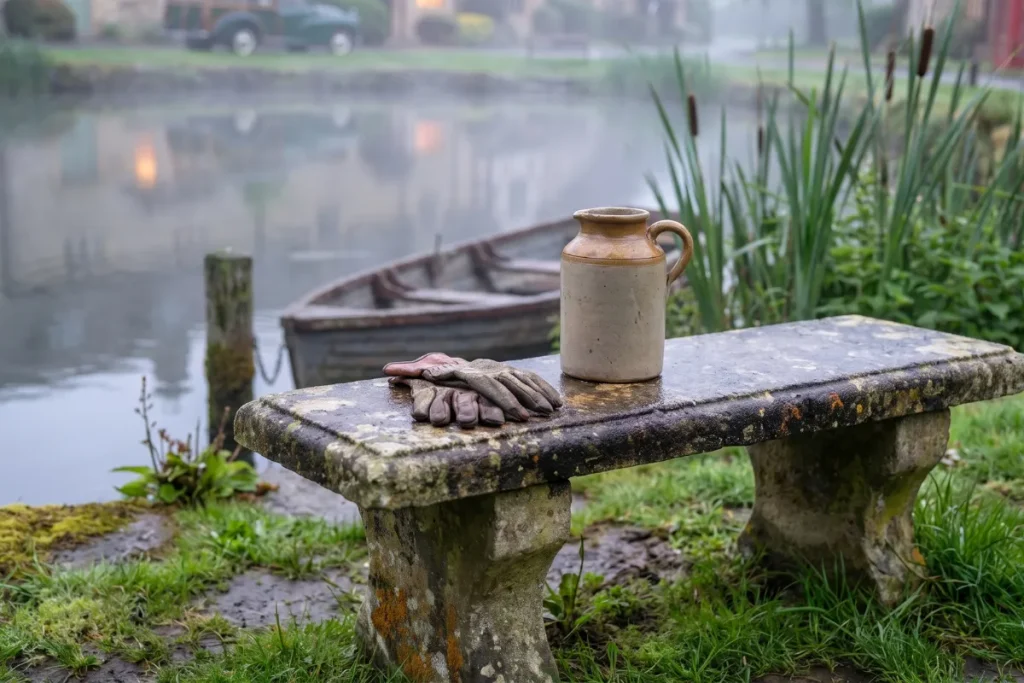
Every village green needs a place to sit, but placing furniture on damp, mossy turf requires heavy ballast. Lightweight wooden garden chairs quickly sink into wet ground or blow over in autumn gales.
Set back on the grass verge, a solid carved stone bench anchors the bank. The seat uses a thick, dressed limestone slab resting on two sculpted masonry pedestals. The sheer mass of the stone keeps it stable on soft ground without requiring deep concrete footings that would disturb tree roots.
This bench is an everyday workstation as much as a resting spot. Left on the slab, a pair of worn leather gardening gloves and an earthenware ceramic jug show that this space gets daily use by local gardeners.
Natural stone handles damp conditions without rotting. As seasonal rain, dew, and winter frost weather the surface, yellow lichen and dark green moss take hold across the carved legs. That slow weathering turns an ordinary piece of outdoor furniture into a permanent part of the village landscape.
Roadside Edging, Curving Pathways, and Street Boundaries
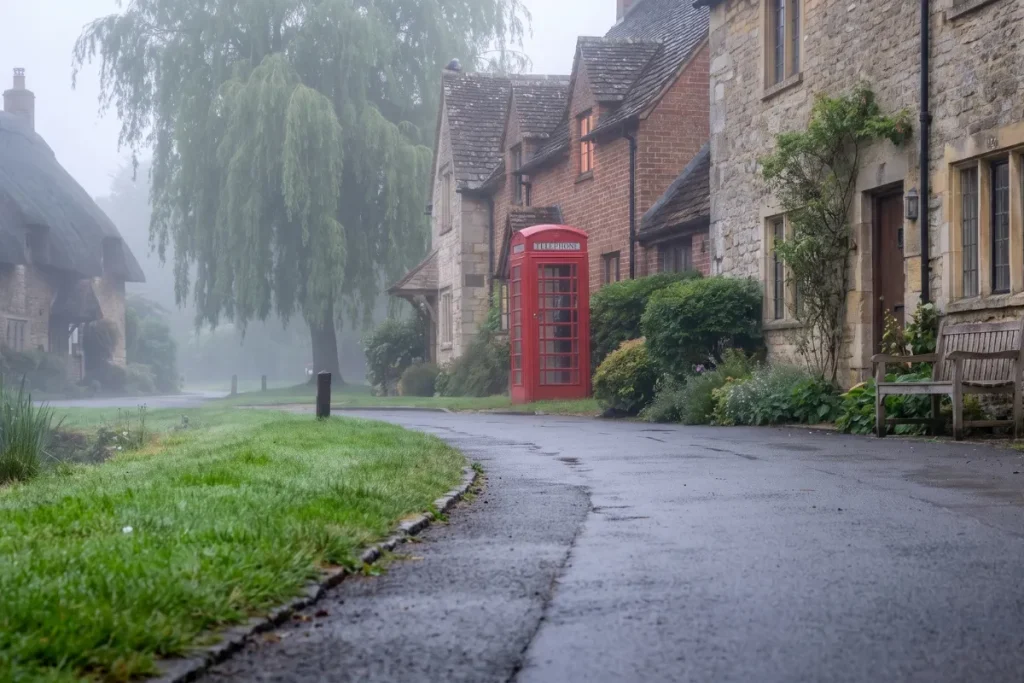
Moving away from the water line, hardscaping dictates how people and cars move through the village. A clean asphalt lane sweeps along the curve of the pond, leading the eye toward honey-toned cottages and the drooping canopy of a mature weeping willow.
Notice the road edge. Instead of installing tall curbs or timber guard rails, the dark tarmac meets the green verge with a simple, flush soil lip. This open transition prevents the road from looking like a modern highway while keeping vehicles from tearing up the turf.
Along the road verge, practical features complete the streetscape:
- Secondary timber seating: A slatted wooden bench faces out toward the water, providing an alternate resting view under open sky.
- Red telephone box: A traditional scarlet K6 kiosk sits right on the grass strip, adding a strong flash of colour near the pale stone cottages.
- Broad grass verges: Wide green strips between road and water absorb surface runoff during downpours, stopping road oil and grit from washing straight into the pond.
These low-key boundary treatments keep village sightlines open from the cottage doorsteps all the way down to the water.
Material Harmony: Pairing Stone, Wood, and Living Foliage
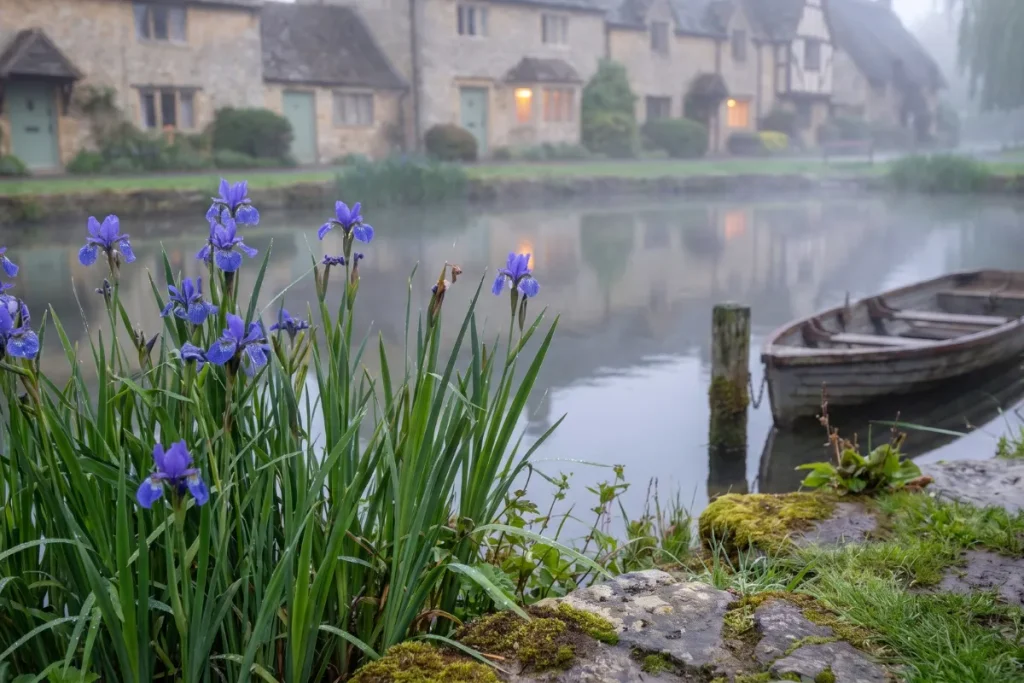
A traditional landscape works because the building materials match the surrounding houses. The pale honey and biscuit shades in the pond retaining wall match the rubble stone facades, slate roofs, and tall brick chimneys across the lane.
Dark timber accents pull the look together. The dark stain on the rowboat and the rough timber mooring post mirror the half-timbering on the cottage gables and the vintage wood-paneled estate car parked roadside.
Planting along the water margin softens the hard stone edges:
- Water irises: Clustered along the base of the wall, deep violet-blue flag irises break up the hard waterline with upright foliage.
- Rushes and pond reeds: Narrow reeds sway near the water’s lip, breaking up the flat masonry face.
- Willow canopy: Long drooping willow trails brush the water, throwing soft green reflections across the pond.
Getting waterfront hardscaping right comes down to using local stone, solid joinery, and water-tolerant greens that handle the wet season without constant repairs.
Take a look through the rest of By Sophie Sweet for field notes on cottage stonework, pond builds, and front garden layouts. Master classic paving and structural masonry in our guide to stone walls, cobbles, and garden paths, or discover more rural architectural beauty in our feature on English village cottage charm in the morning mist.
1 thought on “Traditional Stone Hardscaping Around an English Village Pond”