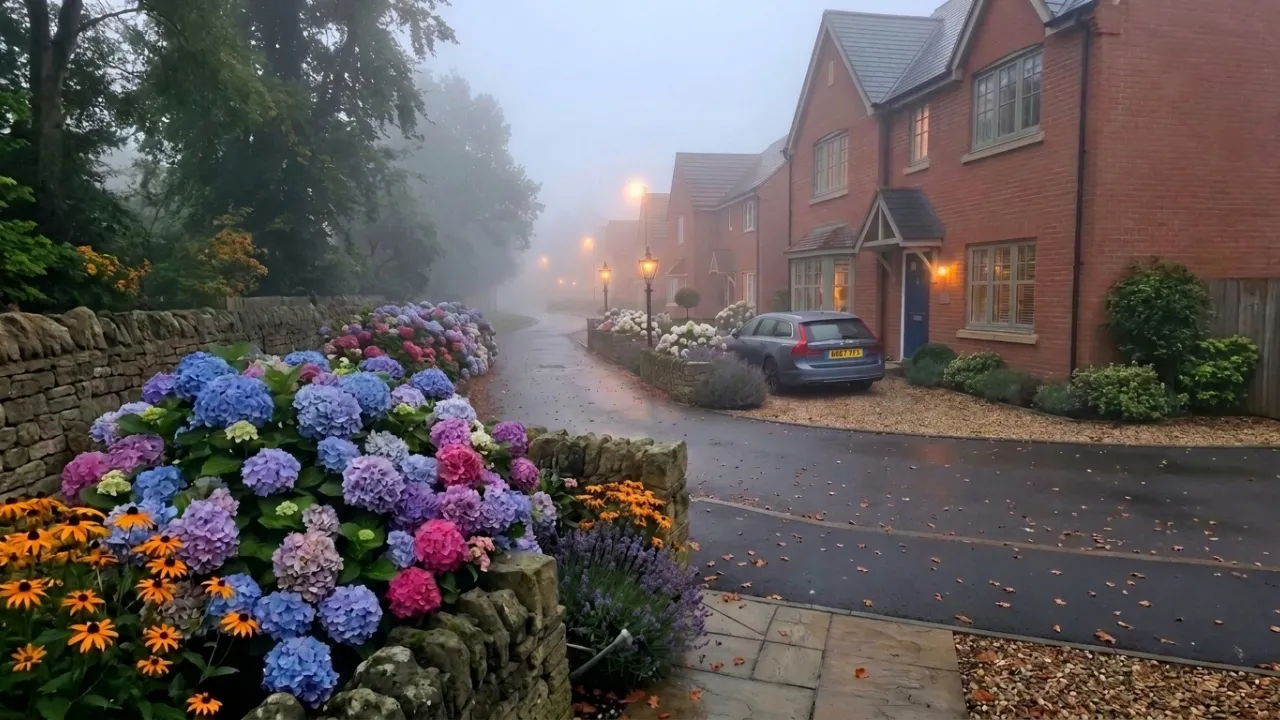
Deep red facing brick and dry-stacked fieldstone dictate how this front garden functions. Direct sunlight often washes out textures, but overcast conditions expose the physical build of the space. You immediately notice the crisp mortar joints, practical perimeter drainage, and the deliberate way cascading perennial borders soften the lower brickwork.
Most front plots fail because they are too flat. A narrow strip of turf next to an asphalt pad rarely works. It looks bare in January and messy by July. To fix that, this layout builds physical depth from the curb backward. It layers structural stone, massed perennial beds, and free-draining gravel bays to give a suburban home presence without demanding daily maintenance.
The Quiet Welcome of Brick and Slate
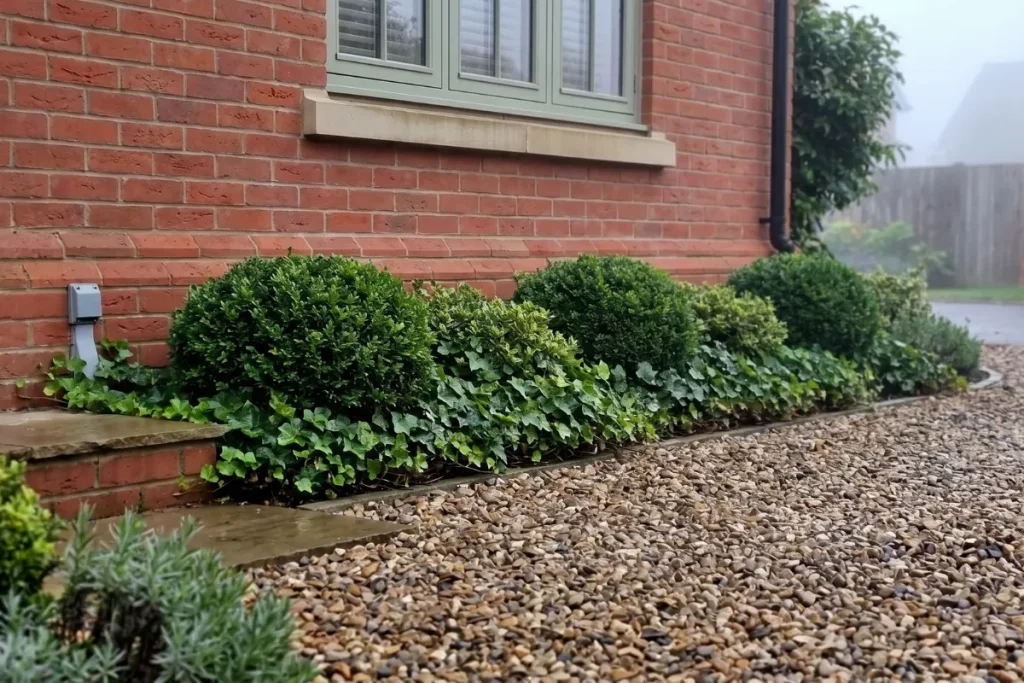
Start with the backdrop. The house uses standard red facing brick laid in a stretcher bond with clean struck mortar joints. It is solid, durable construction designed for wet UK winters. Dark roof slate, steep gables, and lead-flashed valleys add sharp lines above. If you leave the ground plane empty below walls like these, the house feels stark and detached from the plot.
Foundation planting solves that problem. Right at the base of the brickwork, low evergreen mounds and clipped spheres form a permanent green buffer. This serves a trade purpose: dense low foliage stops heavy rain from splattering muddy topsoil onto the damp-proof course, keeping low brickwork clean and dry.
Permeable pea gravel fills the off-street parking bay right off the lane. Gravel works hard here. It prevents surface runoff, stops puddle formation near footings, and rings out with a clear crunch when tires or boots pull in. Casement windows with sage-green frames sit flush in the openings, while a gabled timber canopy protects the blue front door. The planting around the entryway stays low—under knee height—so sightlines to the latch and steps stay clear day and night.
Blooms in the Mist

The main plant mass along the boundary wall relies on large mophead hydrangeas. They are planted thick. Their massive flower heads show a mix of violet, blue, pink, and pale green across the very same run. That color shift comes down to natural variations in soil chemistry; pockets with lower pH release aluminum for deep blues, while sweeter, neutral soil patches turn adjacent heads magenta.
Right at the stone corner, bright black-eyed Susans (Rudbeckia) break up the purple tones. Their stiff orange petals and raised black centers cut through the gray light. Tucked beside them, English lavender provides narrow, silver-gray foliage that softens the hard masonry corner.
Planting in broad drifts rather than scattered singles changes the garden’s maintenance workload. Thick canopies shade out weed seeds completely. Broad hydrangea leaves protect root zones from midday sun, trapping condensation in the soil profile. The stems carry enough wood to lean out over stone without snapping under rainfall, creating a full edge that never looks bare or underplanted.
Craftsmanship in Every Boundary
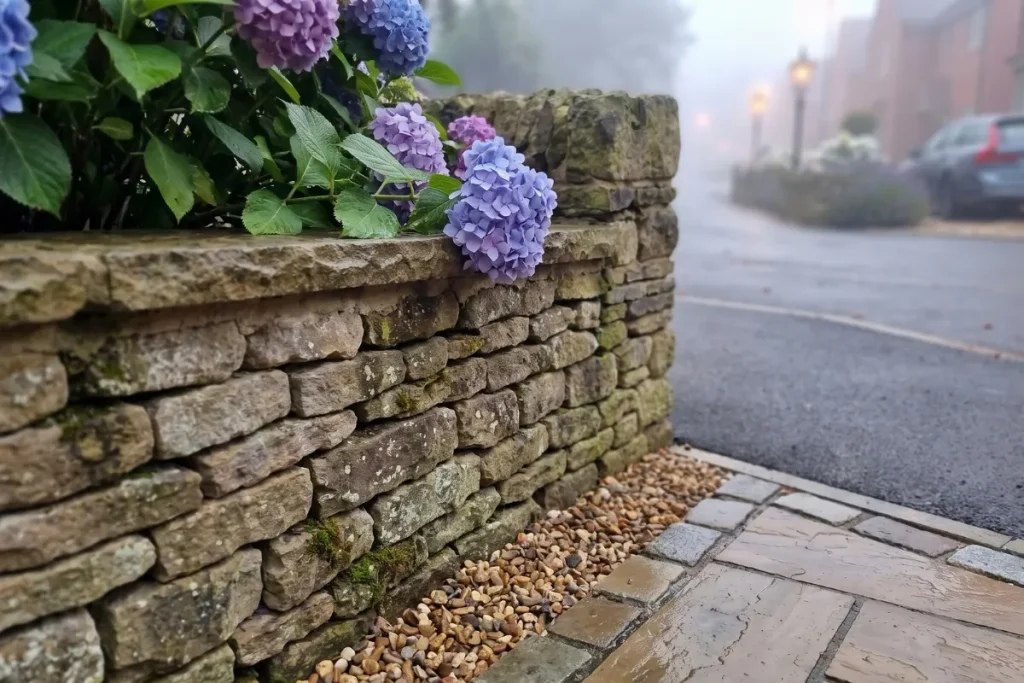
Flowers need a rigid structural frame to look intentional. Here, a dry-stacked fieldstone retaining wall forms the primary perimeter. The stones sit together through friction and weight alone, without a mortared front face. This detail matters for site drainage: ground moisture weeps out naturally between the seams, stopping hydrostatic pressure from building up behind the wall during autumn downpours.
Rough-cut coping stones cap the top run. They lock the upper courses down and give heavy hydrangea stems a wide stone ledge to spill over. Over time, damp air allows fine moss and lichens to take hold in the stone crevices, blending new stone with older earth.
Where the drive meets the shared roadway, transitions are kept clean and crisp. Wide sandstone flags form a firm apron at the curb. Edge setts pin the loose pea gravel into place, stopping stones from scattering out into road gutters while keeping clean lines between vehicle tracks, turf, and mulch beds.
The Glow of the Lamplight
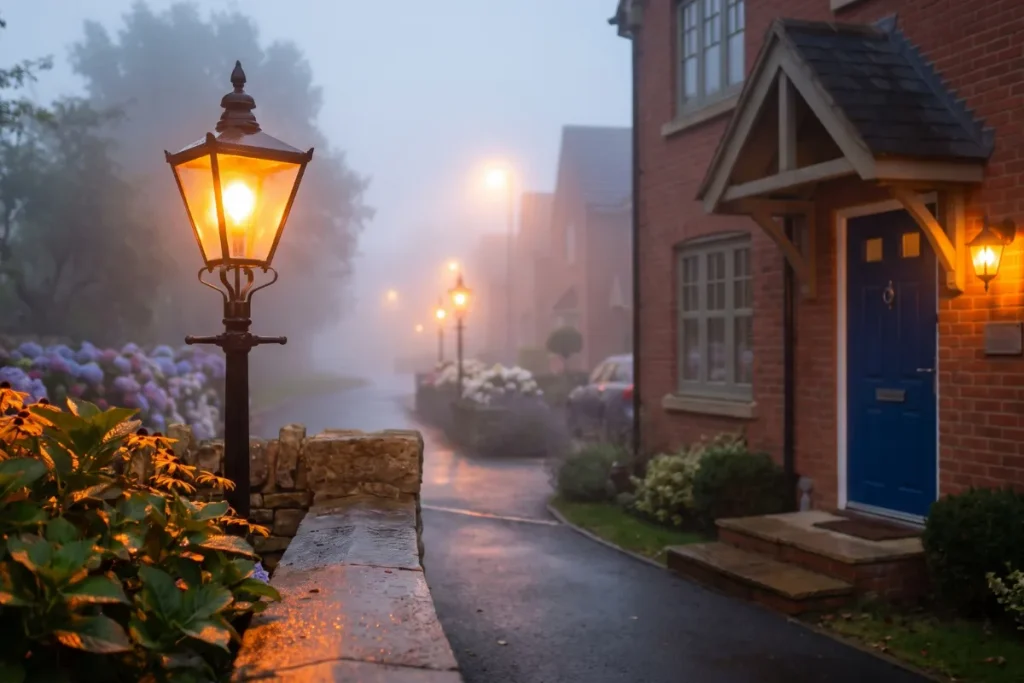
Curb appeal collapses after sundown if you rely on a single glaring floodlight. This lane uses traditional black carriage lanterns mounted on metal posts right at the curb edge. They put out warm 2700K amber light, cutting through cold mist without blinding drivers or throwing harsh reflections into first-floor windows.
These posts mark the asphalt curve. They give drivers and pedestrians clear depth cues in fog and rain. The low light source catches the wet hydrangea foliage underneath, turning water droplets and leaf veins into warm accents along the tarmac edge.
Up on the house, matching wall-mounted fixtures flank the front door. They throw light down onto the lock, house numbers, and doorsteps. Mixing low-level boundary lights with sheltered entrance lanterns gives the entire frontage practical security while keeping the street calm, readable, and visually warm.
A Vision of Enduring Charm
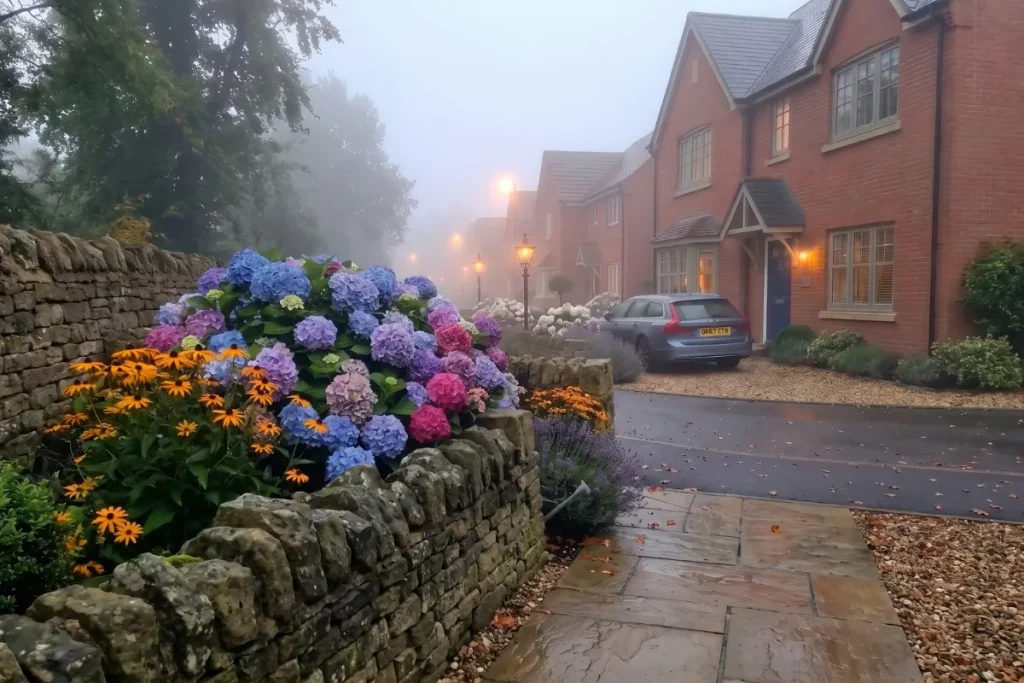
Good residential design happens when materials cooperate. The red brick ties to the warm light of the lanterns. The gray slate matches the wet dry-stone retaining wall. The cool foliage fills the space between hard surfaces and building walls.
Practical choices drive the look. Dry stone handles groundwater without cracking. Pea gravel manages driveway runoff on site. Robust perennials like hydrangeas, rudbeckia, and lavender deliver months of color and weed control without regular trimming or chemical feeds.
A front garden does not need complex layouts to stand out. Build firm boundaries, choose resilient plants that suit your native soil, use permeable ground surfaces, and light the edges with warm fixtures. That combination creates an entrance that looks grounded, works reliably, and welcomes you home in any weather.
Explore BySophieSweet.com for more practical front garden ideas, architectural detailing, and timeless exterior design inspiration. Discover how to create full seasonal color with our guide to lavish blue and pink hydrangeas, or explore structural masonry in our feature on red brick curb appeal and English architecture.