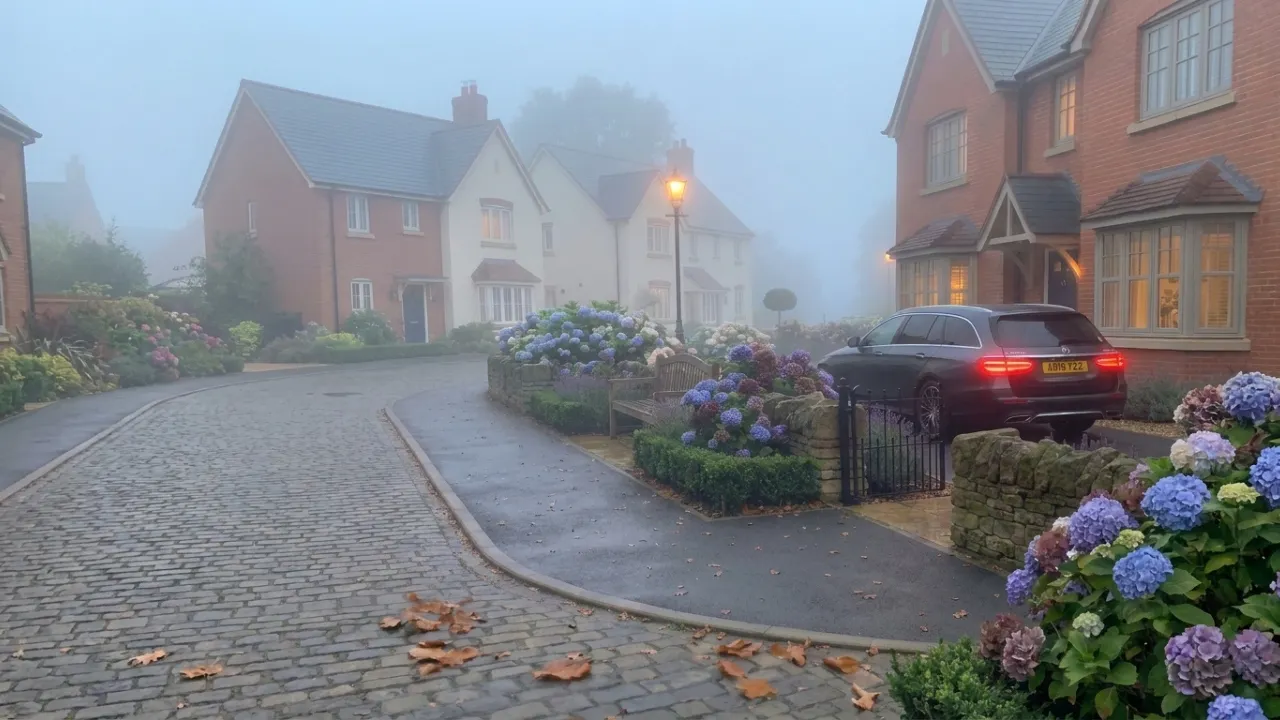
Great front gardens rarely start with plants. They begin at grade with masonry, aggregate sizing, and structural layout choices that organize the plot long before anything goes into the ground. Along a quiet residential lane, boundary stonework and gravel transitions carry the true architectural weight of the entire street.
Laying the Groundwork with Cobbles and Driveway Transitions
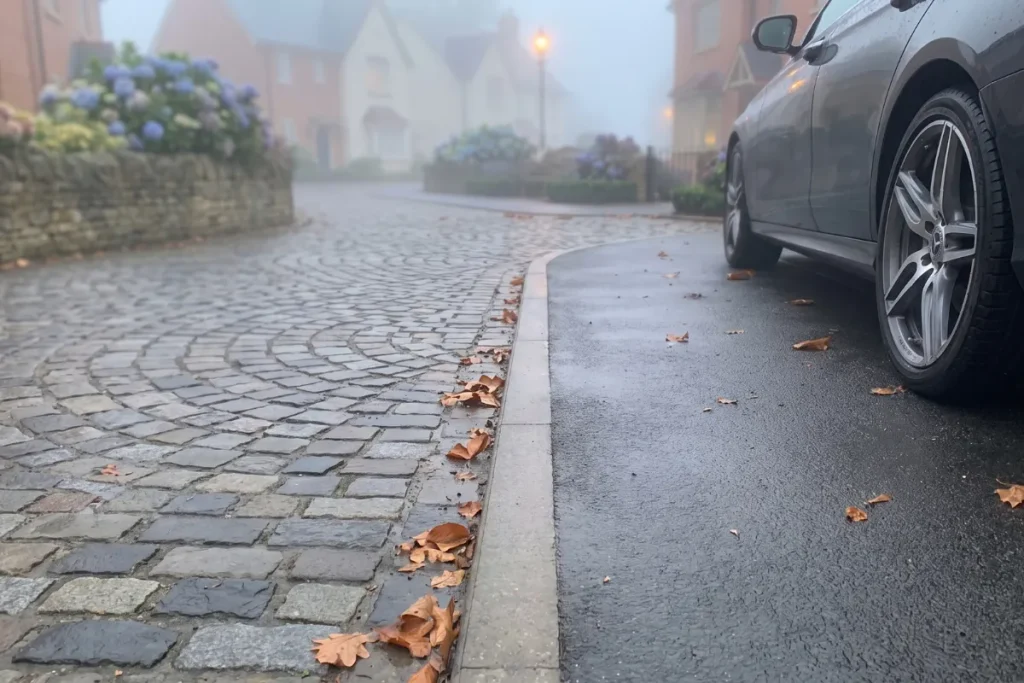
Look at how the road curves into the driveways. Instead of standard black asphalt running uninterrupted from curb to curb, the main lane is laid in traditional stone setts. These small, rectangular granite cobbles create an immediate change in texture and sound. When tires roll across them or someone walks out to get the morning mail, the rhythm shifts. It feels slower, more deliberate, and far more residential than an ordinary suburban cul-de-sac.
The setts are laid in gentle, concentric arcs that follow the bend of the road. That slight curve is an intentional detail; it gives the stone surface direction and keeps it from looking like a flat grid. Notice also how the wet stone catches the pale sky light, highlighting the natural gray, charcoal, and slate tones across every individual block. As autumn sets in, the copper leaves scattered across the joints only make the texture stand out more.
Right at the private driveway entrance, the surface transitions from cobble to smooth, dark tarmac framed by flush stone edging. Making this clean split between public roadway and private parking accomplishes two things:
- It keeps the driveway low-maintenance and easy to clean.
- It reserves the decorative, higher-cost sett paving for the shared approach where it delivers the biggest visual impact.
Low Stone Retaining Walls and Clean Coping Lines
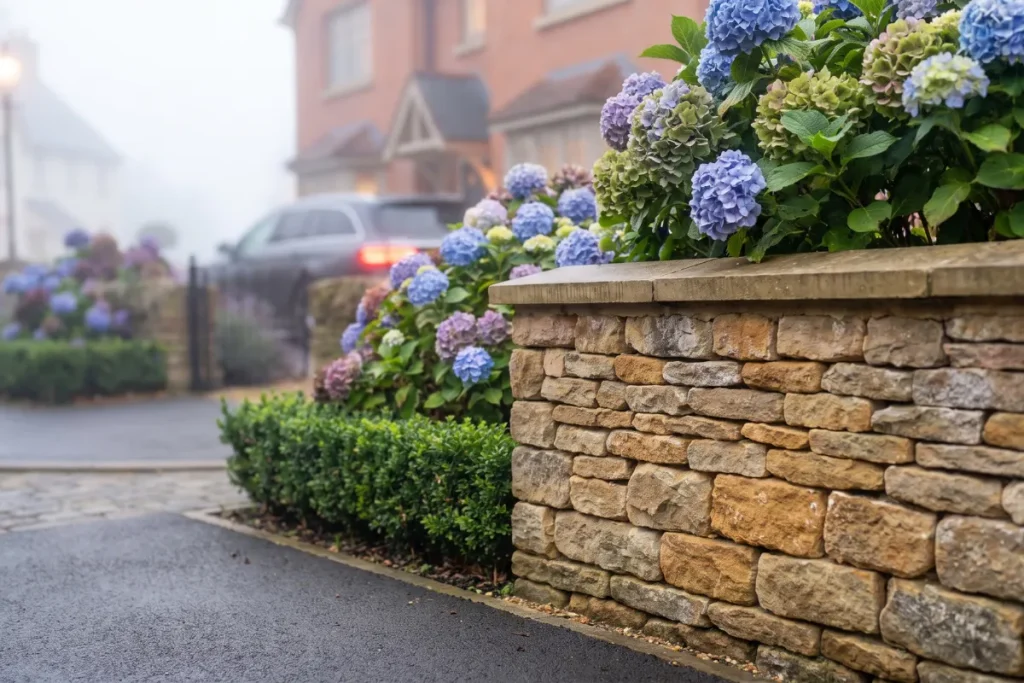
Because the ground slopes gently toward the houses, the planting beds require retaining. Instead of using treated timber boards or modern concrete retaining blocks, the builders opted for rough-faced dry-stacked stone. The blocks vary in size, showing off warm sandy tones, muted ochres, and weathered gray edges that pull color straight from the surrounding soil.
Keeping these retaining walls low—roughly knee-height—is a deliberate design choice. It creates a defined property boundary without making the home look defensive or closed off from the street.
Along the top of the wall, flat, dressed coping stones provide a neat horizontal finish. Coping is not just decorative; it performs several essential jobs:
- It sheds water directly away from the core wall assembly to prevent frost damage.
- It locks the loose stacked stone beneath it firmly into place.
- It provides a flat, tidy edge that neatly frames the sprawling hydrangeas spilling out over the top.
At the base, a crisp row of low-cut boxwood runs along the asphalt line. This green border acts as a visual cushion between the dark pavement and the rough masonry, keeping stray soil off the road while giving the foot of the wall a clean finish.
Built-In Seating, Metalwork, and Perimeter Accents
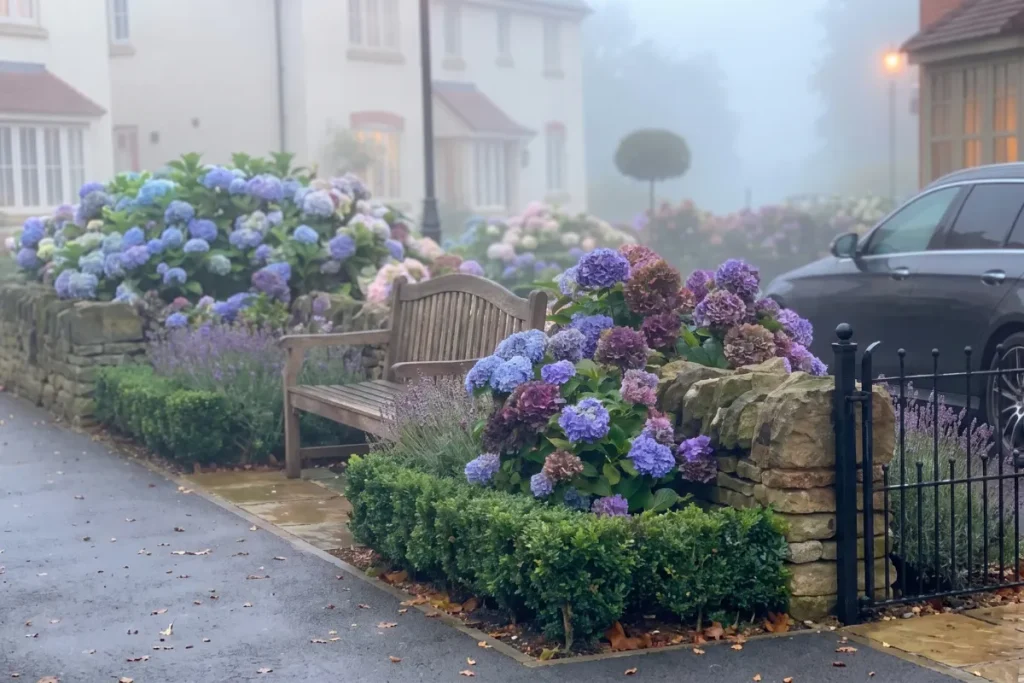
A front yard shouldn’t just be an ornamental pass-through; it can also be a functional corner to sit in. Tucked into the curve behind the stone retaining wall is a slatted wooden bench. It sits on a level stone footing, surrounded on three sides by dense planting.
Placing a bench directly into the front masonry transforms the border into an outdoor alcove. It gives you a dry, comfortable spot to sit with a cup of coffee early in the day while keeping the seating element integrated into the landscape structure rather than looking like an afterthought dropped onto the grass.
Right beside the bench alcove, black metal railings and a low matching gate mark the start of the driveway:
- The vertical metal bars offer a clean, graphic silhouette against the light-colored paving.
- The dark finish matches the window trim and gutters on the brick houses behind it.
- The open spacing allows sightlines to pass straight through, keeping the corner open and secure without blocking visibility for cars pulling out.
Managing Levels with Curbs, Edges, and Drainage
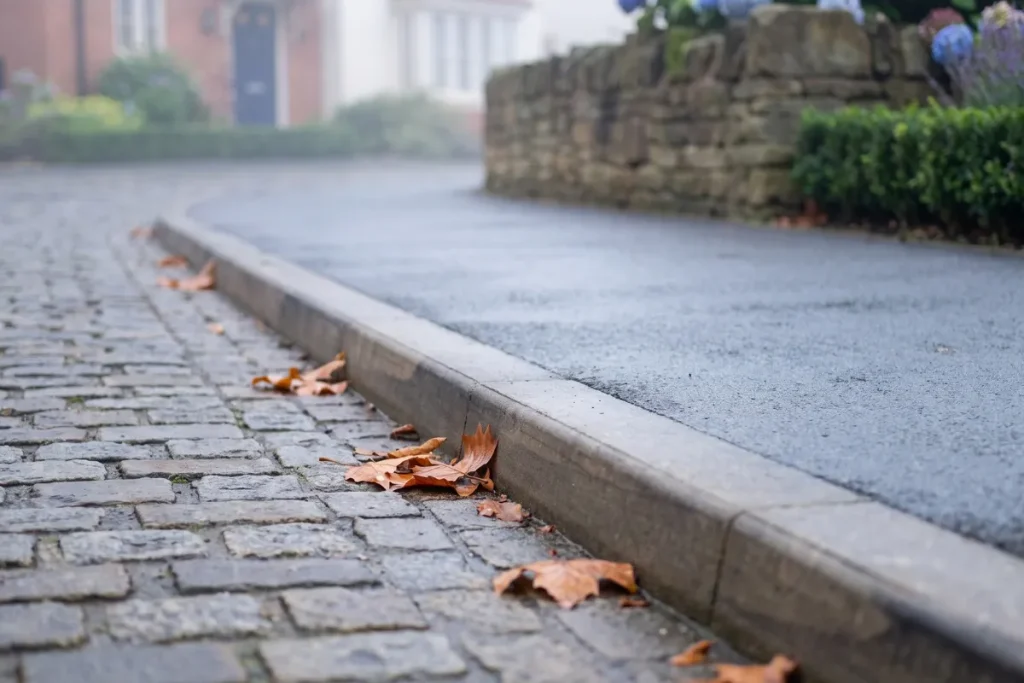
The secret to hardscaping that lasts decades without cracking or spreading is in the edge restraint. Here, a cast concrete curb follows the curve of the asphalt lane, sitting slightly proud of the driveway surface.
This continuous curb does three critical jobs:
- It locks the edge of the stone setts firmly so they cannot shift under vehicle weight.
- It channels rainwater away from the house foundations and down along the planned street drainage path.
- It stops mulch, soil, and stray gravel from washing down into the roadway during heavy downpours.
Where the lawn and the rear beds meet the house footings, the lines stay sharp. Everything has a dedicated boundary: stone for retaining, gravel and tarmac for vehicles, and clean masonry joints where horizontal surfaces meet vertical walls. That clarity is what keeps a front garden looking tidy even in the dead of winter when all the flowering plants have died back.
Connecting Hard Landscaping to House Architecture
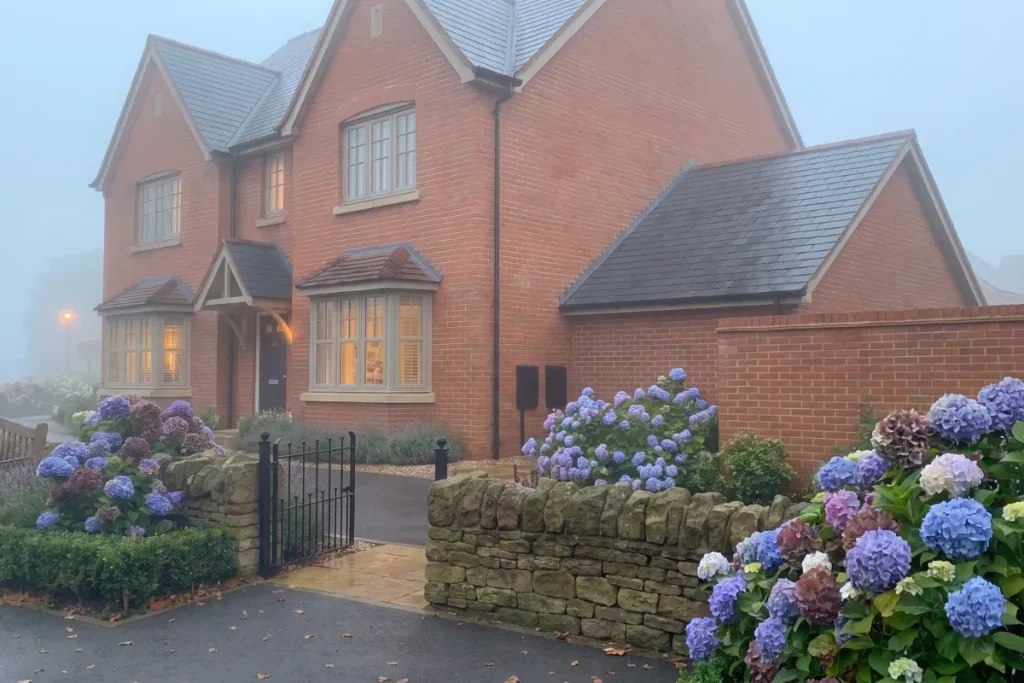
Hardscaping works best when it borrows cues directly from the building it surrounds. You can see that relationship clearly here. The sandy shades in the stacked stone wall match the mortar and the warm tones of the red-brick facade. The dark gray slate roofs and chimney details overhead connect directly with the wet cobbles and black iron gates down below.
When your materials communicate like this across different levels of the property, the whole site feels unified. You do not end up with disconnected elements competing for attention. Instead, the stone paths, structural walls, and timber details work as an extension of the house itself—built to handle the weather, age gracefully, and look just as good twenty years from now as they do on a quiet autumn morning.
Discover more timeless hardscaping techniques, exterior design inspiration, and residential garden craft by exploring our latest features on By Sophie Sweet. Plan cohesive vehicle access with our guide to country driveway hardscaping, or see durable waterfront masonry in action with our look at traditional stone hardscaping around village ponds.
2 thoughts on “Garden Hardscaping Ideas: Stone Walls, Cobbles & Paths”