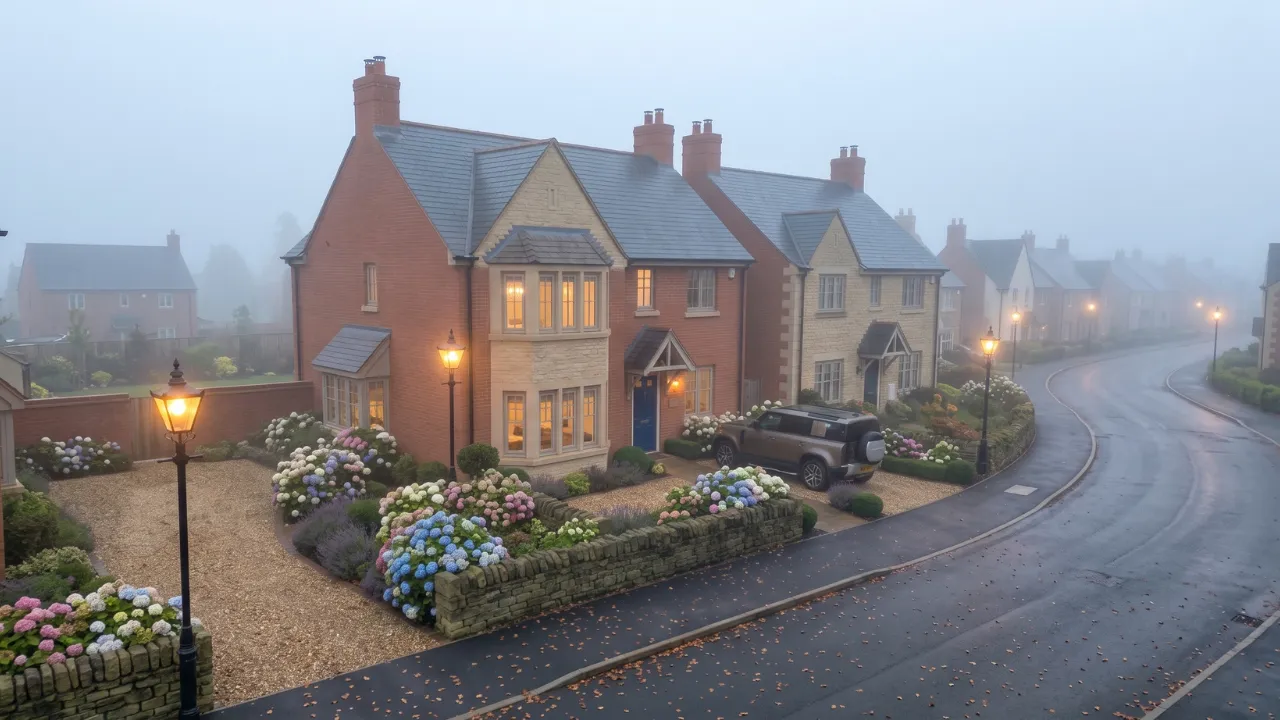
Residential road design functions best when building scale and landscape margins work in tandem. Shared tarmac access lanes, broad gravel driveway bays, and low retaining walls create a calm, legible street plan. The substantial mass of red clay brickwork gives each home a permanent, grounded presence.
Curb appeal along a residential street works through steady, physical thresholds.
It comes down to how a driveway meets the pavement, how low stone walls retain wet garden soil, and how carriage lights guide foot traffic without glaring into neighbours’ windows. When built with solid masonry and generous perennial borders, a suburban avenue feels settled, private, and durable in all seasons.
The way materials age under constant wet weather determines whether a street frontage feels harsh or welcoming. Cold autumn air highlights the physical joinery of porches, the depth of window reveals, and the heavy drift of late perennials along the curb.
Architectural Warmth Against the Morning Fog
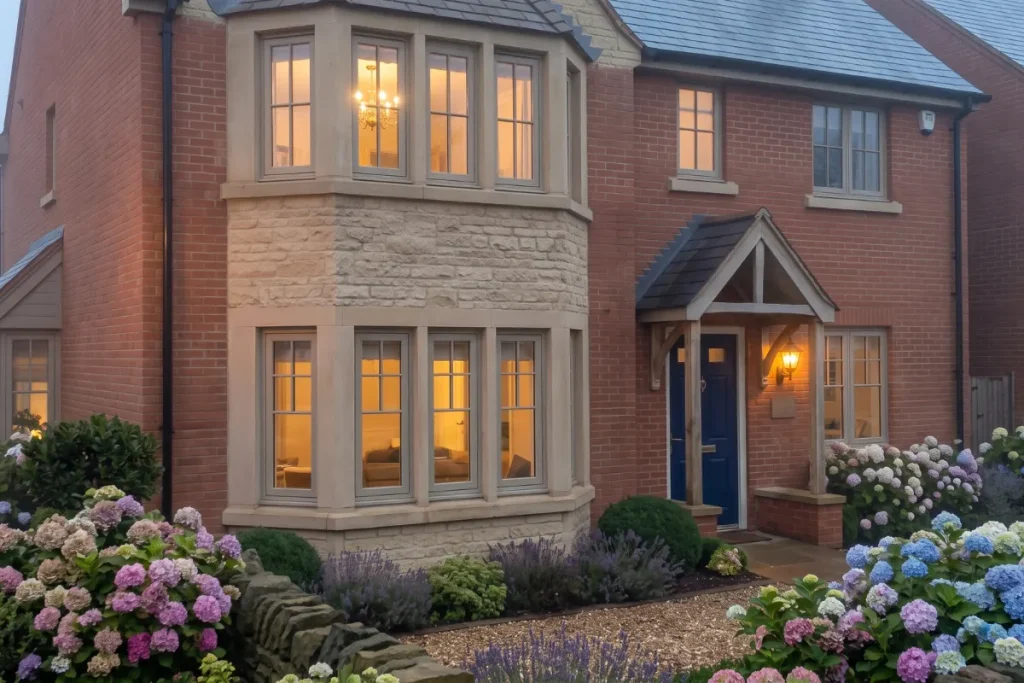
The houses along the lane balance heavy brickwork with crisp stone detailing. Deep red brick facades run alongside sections of smooth ashlar masonry, topped by steep slate roofs and tall brick chimneys that rise into the low mist.
Two-storey bay windows push out from the front elevations:
- Stone mullions: Heavy stone surrounds frame the glazing, creating deep shadow lines across the front wall.
- Double-tier daylight: The bays pull early grey light into ground-floor living areas and upper bedrooms simultaneously.
- Warm interior spill: Warm lamplight inside cuts through the mist, throwing amber reflections across the dewy turf outside.
Down at ground level, open timber-framed porches with pitched slate canopies shelter dark-painted front doors. The side-by-side gables establish a steady rhythm down the lane, reinforced by pale stone quoins marking the building corners.
Beside each doorway, compact carriage lanterns mirror the taller post lamps out on the pavement. The mix of dark roofing slate, brick courses, and timber joinery gives the houses a solid, protective feel on wet autumn mornings.
Up at the roofline, grey lead flashing seals every chimney junction and valley. Good leadwork simply funnels autumn downpours into the cast-iron downpipes, keeping masonry dry through long wet spells without drawing attention to itself.
The Abundance of Late Hydrangeas and Gravel Forecourts
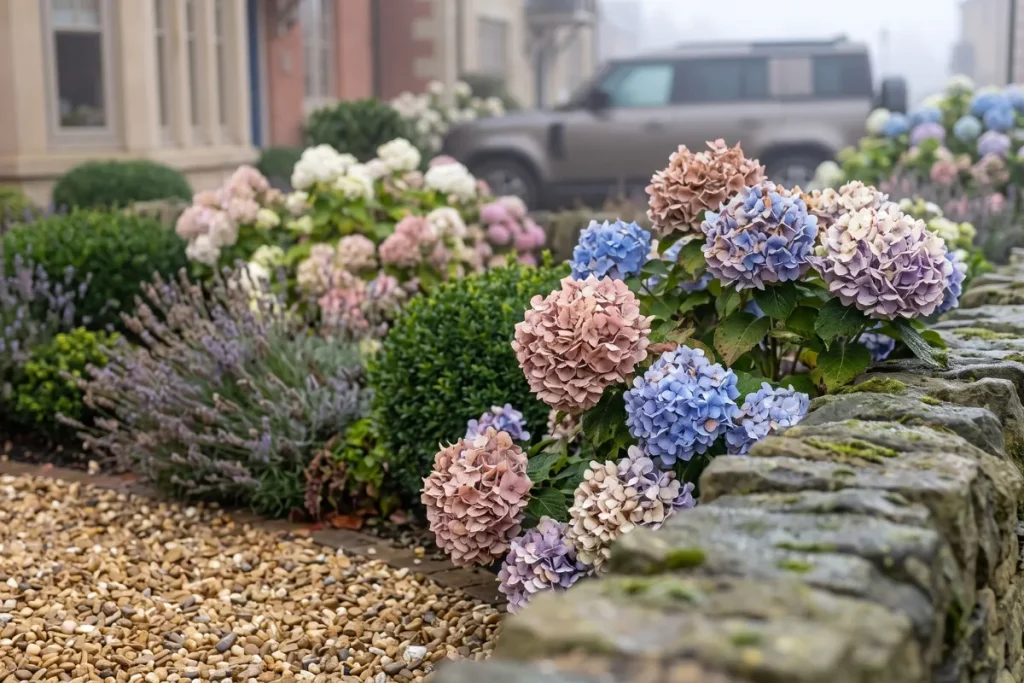
Broad perennial borders soften the transition between masonry foundations and parking bays. Mophead hydrangeas anchor the foundation beds in late-season colours: faded cornflower blue, antique blush, pale violet, and off-white.
Because it is late in the year, the outer petals show papery, dried edges that hold up well against wind and rain.
Between the hydrangeas, structural evergreens and herbs fill out the lower planting tier:
- Boxwood topiary: Clipped evergreen balls sit among the loose hydrangea stems, giving the bed winter structure when leaves drop.
- Narrow-leaf lavender: Slender grey-green mounds soften the border edges with needle-like foliage.
- Low ground covers: Creeping greens cover the mulch line, stopping rain from splashing mud onto lower brick courses.
Instead of solid tarmac or poured concrete, loose golden gravel fills the forecourts. The angular stones crunch underfoot, drain surface water freely during heavy downpours, and bounce pale daylight back toward the house. A single car parked on the gravel fits naturally into the scene without dominating the frontage.
Using open gravel forecourts also prevents soil compaction around mature tree roots near the drive. Rainwater filters straight into the sub-base rather than pooling into sheets of runoff along the road gutter.
Low Stone Retaining Walls and Soft Boundaries
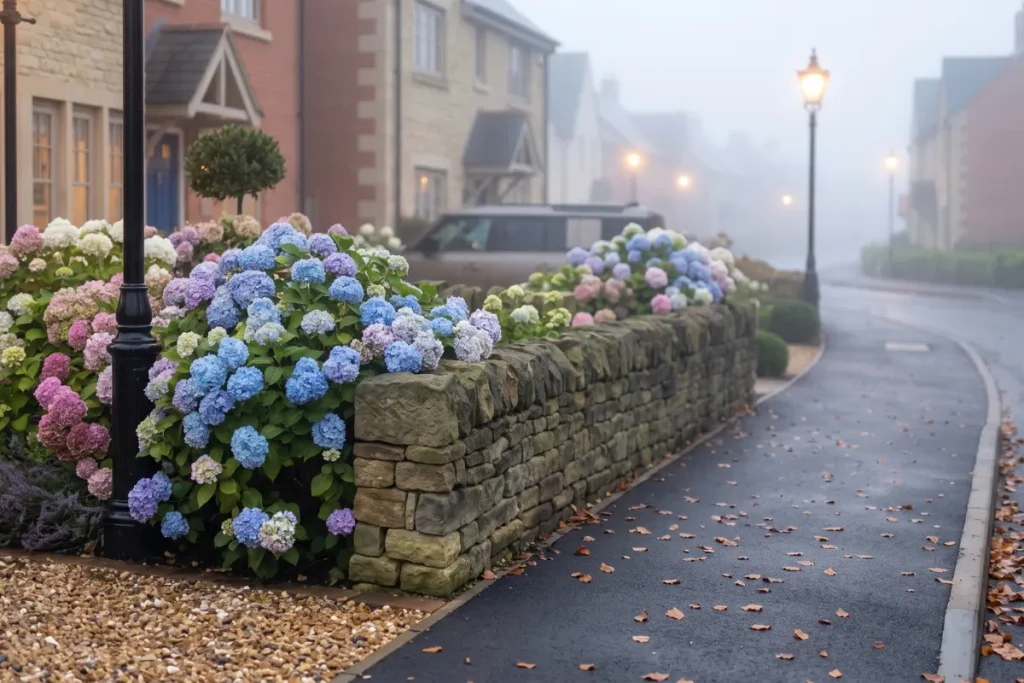
A low dry-stone retaining wall divides the raised front garden beds from the tarmac lane. Built from coursed field stone, the wall follows the natural bend of the road, supporting wet soil without needing tall timber fencing.
The low height of the stone wall leaves sightlines open down the street:
- Natural spilling edge: Heavy autumn hydrangea blooms flop straight over the coping stones toward the pavement.
- Weep holes and gaps: Water bleeds right through the open mortar joints, stopping wet clay from pushing the stone courses forward.
- Across the asphalt, a low brick dwarf wall defines the opposite property line without blocking the view down the lane.
Where the asphalt road meets the base of the stone wall, a clean stone curb keeps road debris out of the planting bed while guiding surface runoff into street drains.
The slight upward slope of the planted lawn behind the wall provides extra depth. It elevates the hydrangea roots above road spray and prevents road salt or vehicle exhaust from damaging delicate perennial crowns during winter freezes.
Lantern Light and Atmospheric Streetscapes
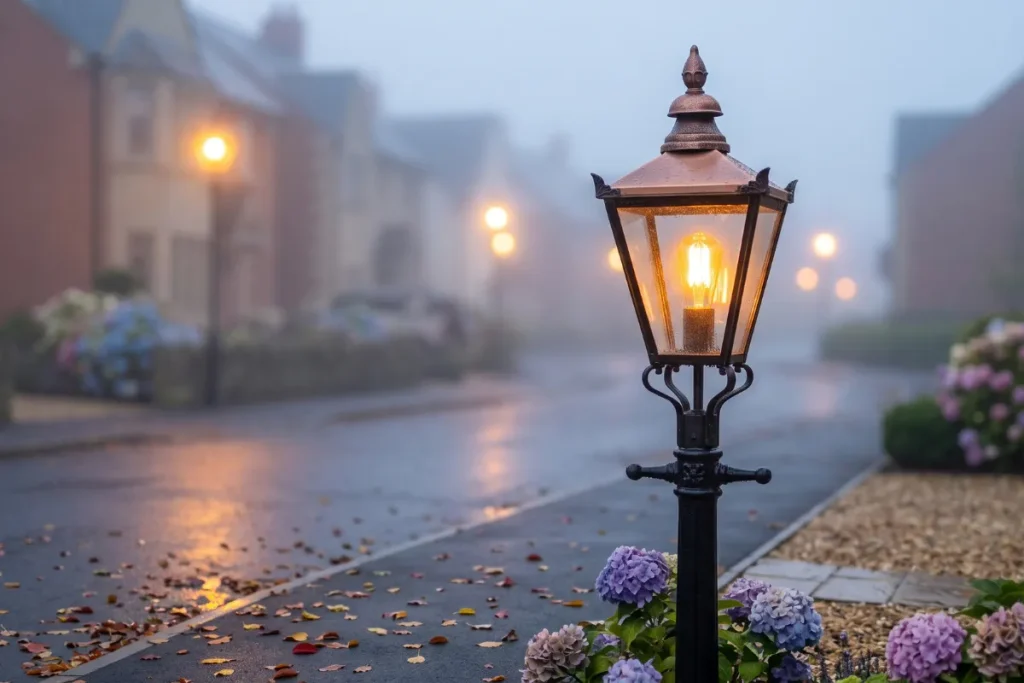
Exterior lanterns do the practical job of showing road turns and driveway entrances in thick weather. Traditional black iron post lamps stand along the pavement edge, their pointed caps and clear glass housings protecting warm filament bulbs.
The amber light cuts through the fog, leaving long golden reflections across the wet asphalt:
- Step illumination: Post lanterns place pools of light right where drivers swing into gravel bays.
- The staggered post lamps show exactly where the shoulder curves into private driveways.
- Solid cast bases anchor the corner of each gravel apron, giving the entrance physical presence in broad daylight.
Wet leaves mat down along the road gutter, catching the glow from above and tracing the dark tarmac edge.
When dusk settles into evening, these lamps create a safe walking corridor for pedestrians without needing glaring highway standards. The yellow-spectrum bulbs preserve night vision while bringing out the natural ochre and crimson tones of the wet fallen foliage along the curb line.
Finding Serenity in Everyday Surroundings
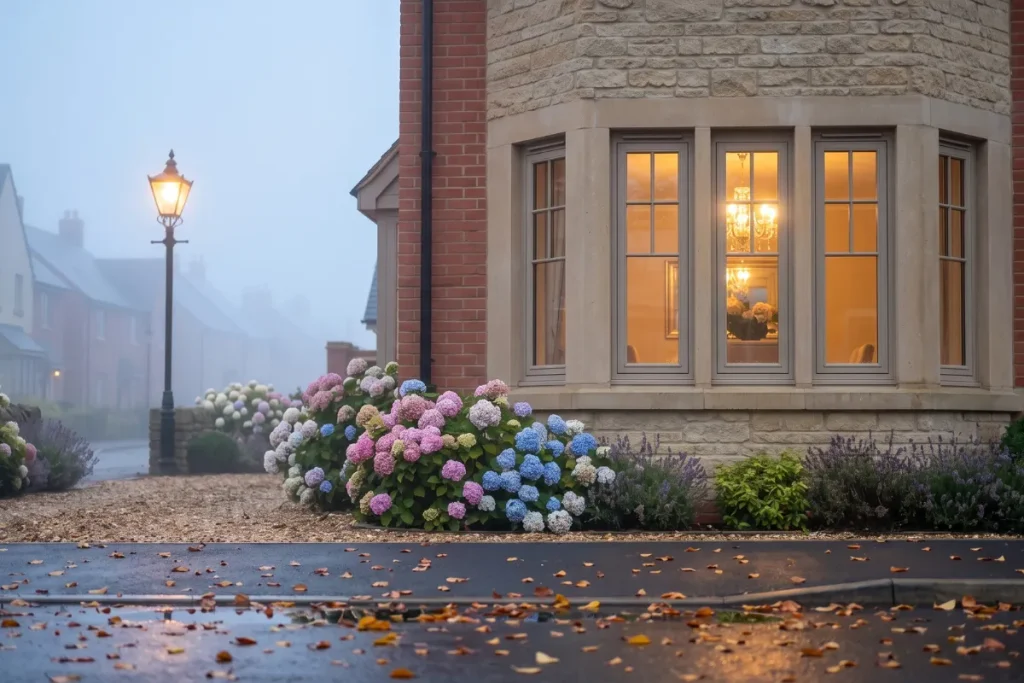
Good residential architecture does its best work on ordinary, overcast days. When red brick, local stone, gravel forecourts, and dense planting work as one system, a street feels grounded rather than stark.
From a chair behind the bay window or during an early morning walk along the pavement curb, the balance of warm light, masonry, and late-flowering hydrangeas makes the avenue feel permanent and welcoming.
Taking the time to match traditional building materials with deep, resilient perennial borders creates a frontage that weathers gracefully year after year. It proves that lasting residential charm comes from durable joinery, sensible drainage, and planting that embraces the damp seasons.
Visit By Sophie Sweet for more practical exterior ideas, traditional stone wall designs, and seasonal garden styling notes. Discover how overcast light highlights period homes in our feature on misty English residential architecture, or design cohesive frontage transitions with our guide to country driveway hardscaping.
1 thought on “The Quiet Magic of English Suburban Streets in Autumn Mist”